Ian Brodie

Ian Brodie


Navigation
CategoryMarketing
Featured

Marketing

Are you Spam?

Posted on May 4th, 2011.

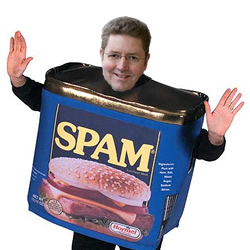
Are You Spam?Are your presentations and seminars thinly disguised pitches for your services?

When you phone up contacts and ex-clients, is it only ever when you want them to hire you or refer you?

Are your articles and blog posts mainly teasers for the “real stuff” which people have to hire you for?

When I meet you at a networking event do you hit me with a cleverly constructed elevator pitch designed to grab my attention and interest in how you can help me?

Take a minute to think about your marketing and business development practices.

Really.

Don't just read on to the next sentence. Think about which of them create value for your clients and prospects in and of themselves. And which are simply you promoting your services.

Lots of the latter and not so many of the former? Then your marketing is the real-world equivalent of spam.

An unsolicited, unwanted, annoying interruption.

Am I being a bit tough here? Setting an unrealistic standard?

I don't think so.

The bar is raising all the time for marketing. Each and every one of us is getting less and less tolerant of being interrupted and sold to.

So when we're the ones doing the marketing, we need to keep up.

We need our marketing to inform, educate or entertain in areas that our clients care about. Preferably all three. Just “getting your name out there” is no longer good enough.

———-
This post was inspired by the discussion on copywriting headlines on Lindsey Donner's How to be Amazing at Everything blog post.

Featured

Marketing

The Excruciatingly Painful Task that’s Critical to Your Marketing Success

Posted on April 29th, 2011.

Do The WorkI've written a few times about just how important having valuable content on your website is to your success at getting clients online.

And the truth is that nowadays, creating valuable content is central to almost anything you do in marketing. It's perhaps the best way of differentiating yourself from everyone else who claims they can do the same as you can.

Want to win clients with presentations and seminars? You need great content.

Want to get more referrals? Give your referrers a report or video or other piece of great content to give away and you'll get many more referrals.

Want to use networking to get clients? How much more powerful is it to be able to send potential clients you meet a brilliant article or report than just your business card?

Want to earn the loyalty and repeat business of your current clients? Send them great new insights, benchmarking and analysis for free.

All based on having great content.

The downside?

Developing great content is hard. Excruciatingly painful at times.

I'm currently working on a private membership site full of my very best ideas, training and knowledge on marketing and sales for consultants and coaches. So far it's been my very best work. I love the material. I love what it's going to be and how it's going to help people.

But it's so, so painful to develop. Like pulling your own teeth out.

With rusty pliers.

And I know I'm not the only one who feels this way. Creating content is a huge issue for so many professionals.

Today though, I read a short book that set lightbulbs off in my brain and, I'm certain, will help me accelerate developing this material 10-fold. It could do the same for you.

It's a Kindle book by author Steven Pressfield (bestselling author of The Legend of Bagger Vance and The War of Art).

You can get it either on a Kindle device or via the free Kindle readers for iPhone, Android, Mac and PC.

You can get it here.

I thoroughly recommend it. It's a quick read – probably took me about 30 mins. And it could have a huge impact on your ability to develop powerful, client-getting content.

Ian

Featured

Marketing

What Carl Sagan Taught Me About Marketing

Posted on April 27th, 2011.

“Extraordinary claims require extraordinary evidence”

Growing up I was a bit of a fanboy of Carl Sagan. Although clunky by modern standards, Cosmos was a ground breaking TV programme and opened my eyes to the wonders of the universe. Later in life I found inspiration in “The Demon Haunted World”.

One of Sagan's most famous sayings was “Extraordinary claims require extraordinary evidence” (although the concept was originated by Pierre-Simon Laplace back in the 18th century).

Sagan was talking about scientific and paranormal claims. But it's equally applicable in today's world where we're bombarded by advertising messages and claims promising us everything from younger looking skin and 6-pack abs to success with the opposite sex, a fulfilling career, a secure retirement, brainier kids and untold riches.

And one of the dominant phenomena of the current era is that we've just stopped believing all these claims.

The problem is even worse on the web. Internet marketers have become obsessed with louder, shoutier headlines with claims that you can make millions in a few months “at the push of a button” or with just a few hours work a week.

And after the initial rush of excitement, most of us look at those claims and think “if they really could do that, why are they trying to sell me a $37 ebook?”.

Of course, the same applies to our own marketing too. We may firmly believe our coaching will help our clients find an amazing new career, or become a great leader, or double their business profits in 6 months. But from where our potential clients are sitting – in a boring job, or failing to motivate their team, or struggling to get by – those claims seem awfully bold.

So we need to prove them.

Lengendary copywriter Gary Bencivenga focused on this. While others were obsessing about clever headlines and hooking-in readers emotionally, Bencivenga stressed that the most important factor in an advert was unquestionable proof – and yet it's so rare.

How can we prove what we say?

  • We can give a “reason why” – a logic to our claim. In Bencivenga's case he talked about an advert he created as a kid to sell worms to fishermen. His headline of “Local worms catch more fish” gave a plausible logic as to why you should buy his worms.
  • We can give evidence: testimonials, case studies, notarized statements of income.
  • We can give strong guarantees.
  • We can demonstrate what we say. If we're promoting consulting, training or coaching on a specific area where we claim to be an expert we can prove that expertise in our presentations, seminars, articles and blog posts.
  • We can give results in advance: share ideas that help our clients improve before they even work with us – so that they'll believe our claims about how they'll improve once we're hired.

And the bolder our claims, the stronger our proof needs to be. As Sagan said:

Extraordinary claims require extraordinary evidence

Featured

Marketing

Getting Your Marketing Done: Top Tips to Get Results

Posted on December 17th, 2010.

All the great marketing plans in the world mean nothing if you don't get them implemented.

And I must admit, this is the area I'm personally the weakest at. I get my kicks from thinking: innovating or solving problems. It's probably what makes me quite a good consultant.

But I'm not so good at actually implementing my ideas myself. I just don't find that quite as exciting.

And my experience from working with hundreds of consultants, coaches and other professionals over the years is that I'm not alone.

It seems endemic that we prefer the intellectual to the practical or relationship sides of business.

So if like me, you're in that camp then the following implementation tips that I've picked up over the years may help you. They've made me vastly more effective at getting things done and getting results than I used to be.

The first tip is simple, but not often followed: don't attempt too much at once.

In previous posts, I've talked about planning your major lead generation campaigns. For an individual, my experience is that it's difficult to manage more than 3 or 4 such initiatives in a year.

And it's usually best to implement them sequentially rather than in parallel. When we multi-task we think we're achieving more, but we rarely give enough focus to each individual task to do it excellently.

And if you think about it logically, given we all have limited time, if you do 4 things in parallel it's going to take you 4 times as long to complete those tasks.

And since you usually don't see any results until you've finished – it means you don't get any results until right at the end.

But if you do each task at a time, you get the first one finished in a quarter the time and you start getting results straight away. Then you do the next and start getting results from that, etc.

Of course, it's not quite as simple as that – but it's not far off.

So focus on one important initiative at a time – hold back on your excitement and enthusiasm to work on them all at once.

Next, don't try for perfection initially. Don't spend ages trying to get your talk absolutely perfect, or your 2-minute introduction for networking, or your article or brochure. Once you're 70 or 80% there, start using it.

That last 20-30% will take ages – and you'll never get it right. The only way to get your marketing right is to test it in the real world and see how people react – then refine it.

I remember very clearly how I spend an absolute age perfecting the way I was going to introduce myself when I went networking.

At the first event where I used my clever introduction, I thought I'd done a great job with the group I introduced myself to. All according to plan. Then a new person joined the group and asked me what I did.

Slightly flustered I kind of stumbled over my introduction and got it much less than word perfect.

But the comment I got from another member of the original group was very revealing: “Oh, that sounded much less scripted” he said. “And I think I actually know what you do now”.

Oops. My attempts to get something perfect had led me astray.

So just get something good, not perfect. Then refine it in the real world based on feedback. Remember – imperfect action beats perfect inaction every time.

Next create action habits. What I mean by this is get into a regular routine of doing things which drive action. It's a bit like going to the gym first thing every morning so it becomes an ingrained habit.

In my case, I find that if I review my project plans every Monday morning and transfer the key upcoming activities either to my schedule (if they're going to take more than about 15 mins) or to my To-Do list – then it gets them prioritised and more likely to happen. I try to get every major activity actually scheduled so that it doesn't get pushed aside by busywork.

Then every morning I check my schedule and To-Do list and I'm off with a clear plan for the day.

Doing this doesn't just help me get organised – it reminds me of all the important activities I have to do and puts a little hustle into my day.

I find that if I don't do this I have a tendency to “goof off” in-between tasks, not realising just how much I have on my plate.

Of course, this particular routine might not work for you. Find your own routine that gets you moving – and make it a habit.

Finally, make commitments. For things which I know I need to do but don't particularly enjoy I'll force myself into action by making a commitment to it.

For example, I'll tell Kathy I'm going to write an article and ask her to ask me about progress at the end of the day. Or when I do the first blog post or email in a series I mention what's coming next so people are expecting it. These external commitments help to keep me on track.

Whatever you do…

…make sure you do something.

My experience is that the people who are the most successful at marketing and business development are simply the ones who do it the most.

Marketing is all about action. Yes, you must do some solid thinking in advance of course. But without action, there are no results.

Don't be the person who sits back and watches others thinking “I could do better than that”. Go out and actually do better.

Ian Brodie

PS – to put a little oomph into your marketing and get practical support for doing it, rather than just learning it – check out the details of Momentum Club by clicking the link below.

Featured

Marketing

Two Simple Steps to the Greatest Marketing in History

Posted on November 28th, 2010.

Bold claim, I know. But I believe it.

Step 1: Listen to this. Listen carefully, it's the lyrics I want you to get.

Don't skip ahead. Don't go any further until you've properly listened.

Step 2: Translate to your own business.

That's it.

OK – I'm sure you're ahead of me already, but let's play with this and look at some of the lyrics.

And there he was, this young boy
A stranger to my eyes

Strumming my pain with his fingers
Singing my life with his words
Killing me softly with his song
Telling my whole life with his words
Killing me softly with his song

I felt all flushed with fever
Embarrassed by the crowd
I felt he found my letters
And read each one out loud.

What would happen if when clients and prospects heard you present, or read your marketing materials or your blog – what would happen if they felt like that?

What would it mean if they felt you were strumming their pain and singing their life?

If they felt you'd found their letters and read each one out loud?

My guess is that you'd never have to worry about getting more clients.

My guess is that you'd be the person they'd most want to work with.

Because no matter how much we like to think clients are hiring our expertise, our intellect, our experience – what they want most of all is someone who deeply understands them.

So here's the big question: how can you get there?

What can you do to “get inside your client's heads” – no, scratch that, what can you do to “get inside your client's hearts“?

Because if you can do that, and if you can communicate that, then the battle is almost won.

Ian

Featured

Marketing

Do you really need a USP?

Posted on November 27th, 2010.

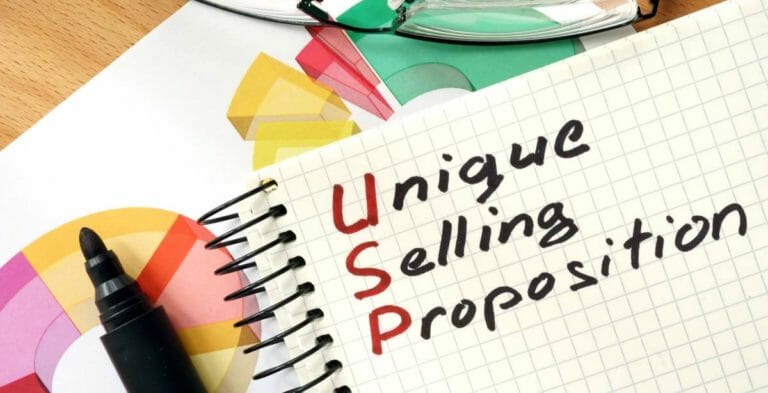
If you've been the recipient of any marketing advice over the last decade or so you'll no doubt have been told that you can't possibly succeed without defining your “Unique Selling Proposition”.

The concept was pioneered by advertising legend Rosser Reeves in the 1940s. Reeves' belief was that each advert should have a USP which:

  • Highlighted a specific and real benefit to the consumer of buying the product
  • Was one the competition could not or did not have
  • Was so strong it could “move the masses” to buy your product

There's a lot to like about this concept. It can be a powerful and succinct way of communicating with your clients – but unfortunately, since Reeves' day it's been mangled and misapplied repeatedly.

Note the order in which Reeves describes his points – start with benefits, then uniqueness.

Unfortunately, the very phrase “Unique Selling Proposition” tends to lead people to start off thinking internally about what's unique about them rather than thinking externally about the value or benefit they bring to clients.

If you start by focusing on what's different about you, you frequently end up with a proposition that just doesn't resonate with clients. There probably aren't many lawyers who wear clown suits – but I wouldn't recommend it as a USP.

For that reason, I sometimes prefer the phrase Value Proposition to USP. It forces you to think first about the value you bring – and then second about how it's different to what others do.

Being able to articulate the value your services bring is particularly important when that value is intangible.

If you help clients with leadership or team building or anything where there’s not an immediate dollar value associated with the results you get for them, then you need to find a way of making that value more tangible and visible. Because at the end of the day no matter how enthusiastic your client is to work with you, when they have to go and get the budget and compete against all the other people looking to spend that same pot of money, they need a really strong business case for why they should be spending it with you.

The first step in developing a powerful value proposition is to review your insights from your ideal client persona to identify their biggest problems, challenges, goals and aspirations that you can help them with. Choose the ones with the greatest financial and strategic impact.

If you end up with a long list, narrow it down to the ones where what you deliver is the most different to what your competitors offer. If needed you can do a simple rating of the value of each area and how different it is on a scale of 1-5 and select the highest scoring ones to explore further.

As you do this, remember that in order to win clients, you don't have to be completely unique and the only person in the world doing something. You just have to be unique in the eyes of your potential client.

In other words you have to be different to the other potential suppliers they're considering, not everyone else in the world. If you're a coach who works with small businesses based in Manchester, it really doesn't matter that another coach in New York does something similar to you. What matters is that you're different and add more value than the other coaches your client is considering in Manchester.

Next, you need to articulate your value in a way that's instantly clear to potential clients.

A good way to do this is to try to put your value into a series of value proposition templates:

  • I help [target clients] get [desired outcome] (or I help [target clients] [solve unwanted problem])
  • I help [target clients] get [functional value] which results in [bottom line/emotional value]
  • I help [target clients] get [desired outcome] without [undesired side effect]
  • I help [target clients] get [desired outcome] even if [typical objection]
  • I help [target clients] get [desired outcome] with [additional benefit]
  • I help [target clients] get [desired outcome] in [specific timeframe]
  • I help [target clients] get [desired outcome] using [unique approach]
  • The only [unique difference/outcome] designed specifically for [target clients]

The first template is one you'd use in a relatively new or immature market where clients know they have a problem they want to get rid of or an outcome they want to achieve, but there aren't a lot of alternative solutions for them available in the marketplace.

In that case, just telling them you can solve their problem is enough. If you have an issue that's causing a lot of pain but you've never heard anyone offer a solution before it's a huge relief when someone says they can help with your specific problem and you tend not to need a lot more persuading.

More usually though, there will already be people offering to help them with that problem. So you need to offer a solution they see as a better fit for them.

That might be a solution without some of the undesired side effects that normally go with it (e.g. “more sales without becoming a pushy salesperson”) or a solution that addresses some of the common objections your ideal clients have (e.g. “build your own website even if you can barely use Microsoft Word”).

Or it might be they get additional benefits from your particular service, or you get them those benefits in a specific timeframe or with a guarantee, etc.

Use the templates as starting points and triggers for your thinking – not a straightjacket. And get your ideas out on paper first before worrying about wordsmithing them. Once you've identified a value proposition statement that feels the most attractive to potential clients you can strengthen it by making it more specific, succinct and memorable.

In practice, you won't necessarily use the “I help…” format everywhere. It's just a good way of starting your thinking.

On your website home page, you'll probably want to word your value proposition more in terms of what your clients will get. For example “Rapid Sales Growth for Software Startups”.

In that case, you might use “I help software startups grow their sales quickly” in your Linkedin profile or on your About page. But on your home page, you want to make it more about them than you and use the “Rapid Sales Growth for Software Startups” version.

Follow this simple process and you should end up with a solid Value Proposition.

And if you want in-depth training and direct help to do this, Creating a Powerful Value Proposition, is one of the core modules in my Momentum Club Rapid Results Program. If you'd like to start getting better results from your marketing and business development then you can find out more by clicking the button below:

Featured

Marketing

How To Build Yourself As The Authority Figure In Your Industry

Posted on August 7th, 2010.

Today's article is a guest post from Travis Petelle of Breakthrough Business Solutions. Travis has picked up on my ideas on Authority Marketing and shares some excellent tips on how to build an authority position in your business.

Building yourself as an authority figure in your niche could possibly be the best thing you could do for your business. It promises easier sales, more prospects knocking at your door, and overall a much simpler time getting what you want. Expecting this respect to just fall in your lap is foolish at best. You must take action to build yourself as the authority and that's what I wanted to cover in this article.

As Ian stated in his article, Authority Marketing: The Essentials, becoming the authority is more than just having the expertise. There are plenty of professionals with expertise in your industry available. Each one of them probably has about the same amount of knowledge and expertise in the subject. What's going to make you different? What's going to allow you to stand out from the rest of the crowd and have people begging to hear more from you. Building you as an authority will.

There are a number of ways to do this. You could add simple things to your website, create masterpieces that help your audience, or get hosted in several locations. Allow me to show you some great tactics that could easily increase your credibility and authority in your industry.

Instant Authority Builder – Become An Author

Writing a book and getting it published in your industry is one of my favorite ways to build authority. I often work with doctors, lawyers, and other professionals, and one of the main projects we focus on is making them a published author. When the public sees this, they instantly think of you as a higher authority. You are instantly seen as knowing more then others in the subject. It also opens the door to media coverage which I will get into later.

Becoming a published author isn't as difficult as you might think. If you aren't much of a writer, you can always hire a ghostwriter to help you get what you know down on paper.

Depending on your industry, you might find it difficult to get a book published by major publishers. There's an easy fix to this as well. Get your own book published. Amazon offers an easy to use service that will publish your book for a relatively cheap price. Just having that physical product with your name on it is what builds the authority.

Don't Be Afraid To Speak In Public

Public speaking is a great method to build your credibility and the influence you have on prospects as well. The reason it's such a powerful method is because you are helping the audience. Public speaking is all about informing others. In a consultant's example, once you show one member of the audience how to double his business by contacting his database, he will start talking to his friends about what your speech did for him. The power of referrals is tremendous and public speaking is a key step to fast referral building.

Make Good Friends With The Press

When you generate attention from the press, your authority will quickly build in your industry. Even just a simple newspaper article about your business or a guest spot on a radio show can and will get customers knocking on your door. There are always new stories developing that are related to every industry. The key to grabbing the attention of a reporter or radio producer is creating a captivating angle on these stories. Once you offer them something their readers will enjoy, they will keep an eye out for your name and what's going on with your business. Having a book and doing speaking events really helps put you in the press's spotlight as well.

Building Authority From Your Website

You all know how important your website is in today's market. It's where 9 out of 10 customers of any service or industry research before they buy. This is why it's so important to begin the process of building you as an authority from your website. It's the first place they are going to look to learn more about you. Here are some simple things you can do to help start building that authority:

  • Add Association Logos – BBB, BNI, Local Chamber of Commerce, etc.
  • Adding logos of places like FedEx, UPS, and USPS helps. These companies spend a lot of money to market themselves and just having their logo can cause credibility to rub off on you.
  • Have methods of payment accepted logos such as credit card logos. Shows you have been approved by 3rd party vendors who have spent millions building their credibility and they have approved you. You could also add PayPal or other online checkout logos if you accept internet payments.
  • Offering a powerful guarantee and make it a logo.
  • List a local phone number and a toll free number if marketing out of your area.
  • Post icons that show as seen on Google, Yahoo!, MSN, Bing, etc…
  • Include any awards you have earned even if it's not directly associated with your work. Charities often award these type of certificates, etc.
  • Any press release or news story featuring you or your business should be on your website.
  • Splashing testimonials across your website in random locations shows that what you do works.
  • Celebrity endorsements will rock your credibility even if they are just industry specific celebrities. Having pictures of you shaking hands with the celebrity etc.
  • Contact page including a picture of your office or building, Google Map, Fax , etc.
  • Link to Secretary of States office with YOUR business listing
  • A video of you speaking about your industry will boost your authority as well.

Becoming an authority in your industry is key to creating a highly successful business. As the authority, people come searching for you…not the other way around. You get the opportunity to start turning down clients instead of wondering where the next one will come from. So, get out there and start learning how to influence people.

This was a guest post by Travis Petelle. He is the president of the consulting firm, Breakthrough Business Solutions.

Thanks Travis!

Featured

Marketing

Authority Marketing: The Essentials

Posted on July 10th, 2010.

Authority MarketingIn recent posts I’ve been musing over the concept of Authority Marketing. After my last post where I talked about the benefits of establishing authority, one reader rightly posed the question: “what’s the difference between authority and expertise?”

It’s a good question. We all feel intuitively that authority implies something more than expertise – but it’s sometimes difficult to put your finger on exactly what it is. Is authority just the upper echelons of expertise? Or is there something more to it?

Authority is Expertise + Influence

For me, the key is that while an expert is defined by what they know; an authority is defined by who listens to them.

In other words, you can be an expert by knowing a lot. But to be an authority, people have to listen to your expertise and act upon it.

An authority is the expert people turn to for guidance. When they speak, people listen.

So to become an authority, you must not only build your expertise, you must build your influence.

I’m very tempted to do a 2×2 matrix here with expertise on one axis and influence on the other. But I’ll refrain from consulting cliches on this occasion.

To be influential, you must communicate, and you must be persuasive.

And this is where many professionals fall down. They have a high degree of expertise, but they're unable to communicate it in a persuasive manner to their target clients.

Some don't communicate at all. They're either uncomfortable marketing – or they've fallen into that terrible psychological trap of believeing they're entitled to be respected and listened to because they're experts.

Others communicate badly – they stumble, or confuse and complicate.

Others communicate, but don't persuade. Their communication is informative – but it doesn't guide listeners to action.

Authorities simplify (without oversimplifying) the complex. They give clear recommendations and courses of action to take. They communicate frequently and effectively. And they're listened to.

What will it take for you to become an authority in your field?

Featured

Marketing

Linkedin Profiles – My Shocking Findings

Posted on June 16th, 2010.

My latest tips on building a Client Winning Profile for Linkedin are now on a free, short video – click here to watch it.

Last night I was finalising a training course I ran today on Linkedin. I was having a quick look round at people's profiles for good/bad examples – and what I saw shocked me.

First a little bit of background:

In my landmark post 10 Linkedin Tips for Professionals (still showing on page 1 of google for “linkedin tips”!) the very first Linkedin tip I shared was to build what I called a Client Focused profile.

When most people join Linkedin they do one of two things.

After going through the process of telling Linkedin your education and previous jobs you get the chance to create a summary. This is the main thing people will look at when they visit your profile – it's your opportunity to say exactly what you want them to read when they do so. Most people spurn that opportunity.

Either they put nothing in their summary at all, or they essentially copy the text from their resume and talk about the jobs they've had, the responsibilities they've held, the achievements they've made, etc.

It's a huge mistake.

Your achievements and responsibilities may be great for a resume – but are you actually looking for a new job right now? Did you join Linkedin to use it as a place to store your resume for all to see? Probably not.

Most of us aren't looking for a new job most of the time. But we are on the lookout for new clients most of the time.

For the vast majority of professionals, their Linkedin profile summary should be written to give the right impression to potential clients or potential referrers (depending on whether they typically get their work mainly directly, or mainly from referrers).

It's not hard. Figure what impression you want to give to clients and referrers and write to create that impression in your profile.

Perhaps you want to come across as an expert, or someone who's approachable and easy to do business with. Or experienced. Or fun. Or empathetic.

Whatever it is, figure it out. And prove it in what you write. Your profile summary is the thing that's looked at more than any other – and it's under your control.

It will be looked at by potential clients who you meet and then who check you out online afterwards. It will be looked at by potential referrers who you offer to connect with.

It's not rocket science. Don't mess it up.

And yet last night, when I looked at a random set of profiles I was truly shocked by what I saw. They were awful.

I searched for profiles containing “managing director” in the job title.

What I got in the first 10 I looked at were:

2 who had nothing in the profile summary at all.

1 whose summary said “for information go to www.mysite.com/myprofile” (if he couldn't be bothered to copy and paste a decent profile onto Linkedin what on earth makes him think the people reading his page would be bothered to copy and paste his website address to go and see it?)

1 who just listed some consulting jargon words. Business Process Reengineering, ERP, etc.

3 Who said nothing about themselves – just what their company did. No personal connection at all.

1 Who told me all about his vision, his favourite mottos, the rules he lives by (but nothing about what he might be able to do to help me).

And only 2 who had reasonably descriptive profile summaries that actually said who they worked with, and how they helped them – so that I was able to see whether I'd be interested in connecting with them further.

And these were all very senior people.

Frightening really.

Featured

Marketing

Authority Marketing

Posted on April 22nd, 2010.

Authority MarketingSometimes my blog posts are fully formed ideas that I'm sharing, or examples of best practice from my experience, or a snippet of the training I deliver.

But sometimes the blog acts as more of a conversation with myself as I explore a new concept or topic. This is such a blog post. What you read below is more like you're looking over my shoulder as I scribble ideas in my personal journal. It's not a fully formed idea. It's not something you can pick up and implement right now. But it might help your thinking.

Any feedback would be appreciated.

——-
In my recent post on vertical differentiation I highlighted that the best marketing positioning for most consultants, advisers and other professionals is not one that's “different” to their competitors – but “above”. In other words, “we're the best in the field” – where best translates to best results.

How do you achieve that positioning? Through what I call Authority Marketing.

Authority Marketing is the process of establishing yourself or your firm as a leader – an authority – in your field.

Why is it important to establish yourself as an authority?

Well, direct marketing guru Dan Kennedy said a rather long time ago “it's all about the offer”.

In marketing we obsess about writing compelling copy, about design, image etc. But as Kennedy says, the single most important determinant of whether someone buys is the offer we make them. It's the value of our product or service.

You can have copy written by David Ogilvy himself, but unless you're offering something of high perceived value you won't get sales. Or to put it another way: you can put lipstick on a pig…

So how do clients determine value for professional services?

Well, of course it's dependent on the situation. Some clients just want a basic service at low cost. But to be frank, I don't want to play in that game – and neither do most professionals.

It's actually very difficult for clients to determine the value of a service they're going to get from a service provider. More often than not, the service will be tailored to the specific needs of the client. So in theory, all providers offer the same value because they're all offering the same “solution”.

What's different is the client's perception of how well they're able to deliver that value – or what the risk is that they might not deliver it.

And that's largely dependent on the perceived expertise and authority of the professional.

If the client doesn't believe you're an expert in your field – then the only part of the value equation you have to play with – the only way to differentiate yourself from your competitors – is through price. That's not a good place to be.

But how many of us focus on establishing our authority in our marketing and business development efforts? Not many.

Networking is the favoured approach of most professionals – be it face to face or social. But although it's a great way to meet potential clients, how easy is it to establish your authority in your field? Usually not easy.

Yes, they get to know you, like you and trust you.

And the old saying goes – all other things being equal, people buy from people they know, like and trust.

But guess what? If you're competing against an Authority Marketer – all things aren't equal.

If you're up against someone who's already perceived as an authority, you're starting with a huge handicap.

Yes, I like to do business with people I know and like. But if I'm developing a new strategy for my business, or if I want to minimise my huge tax bill, or I need my case defending – I want the best (within my range). So I'll pick someone I perceive to be an authority.

Look at most professional service firm's websites. What do they have on them?

About Us, Our Services, The Way We Work, Our People, Our Values, blah blah blah.

Nothing to establish their expertise or authority – other than claims about their great people and leading edge thinking. No proof.

And by proof I don't mean testimonials. They're 10 a penny.

What I want to see is examples of your expertise. If you're in marketing, show me some new marketing ideas. Get me excited about new insights I've not seen before that I can really use in my business.

And think about your own marketing for a moment.

What if instead of trying to “get in front of clients” or “establish our brand values”, the objective of your marketing was purely to establish yourself as an authority in your field.

What would you do differently? What approaches would you use that you don't use today? What approaches would you tweak and use differently? And what approaches would you drop? And how might that make clients perceive and react to you when they first meet you face to face?

Worth thinking about.

There'll be more on Authority Marketing in upcoming posts.

Update: I've developed more thoughts in this area in a more recent post on authority marketing: