Ian Brodie

Ian Brodie


Navigation
Searchtime
Featured

Strategy

Practical Tips For Romancing Your Clients

Posted on February 27th, 2011.

RomanceI often talk about the importance of courting your clients – investing in building a high quality relationship with them.

Great in theory – I don't think anyone would disagree with the concept.

But why do so few people do it in practice?

The truth is that romancing your clients is hard work.

It's a bit of a grind. And it's work that doesn't pay off immediately.

Consistency is the key – you need to be regularly in touch, not just calling when you need something from them.

Consistency requires you to be systematic. And I have to admit, I'm far from the most systematic of people by nature.

So this has always been a bit of a struggle for me. I'm always tempted to focus on shiny new toys rather than keep focusing on old friends.

To keep myself on the straight and narrow I've devised a simple system that even I can use to make sure I'm being consistent with my client nurturing activities. It might be helpful to you too.

There are three steps to it.

The first is to list and categorise your potential clients. I use a fairly simple approach:

  • I mark those clients who would be ideal for my business and who could bring me a lot of work as category A.
  • Potential clients who are close to ideal, or who are ideal but small and wouldn't bring me a lot of business I mark as category B.
  • People I've met who are interesting, but I don't yet know if they'd make good clients I consider as category C for now.

My primary method of keeping in touch with this C category is via my email newsletter (which, of course, my As and Bs also get).

The second step is to write down your goals for your relationship with your A and B category potential clients.

In particular, I focus on what I'd like to achieve with them (perhaps it's that they hire me for coaching, or maybe it's a big training project) and what they need to know and feel before they'll be ready for that.

So, for example, if I'd like them to become a coaching client, perhaps what they need to know and feel is that I understand their challenges and that I've got the skills to help them overcome them.

Maybe they also need to feel that I'd be a nice person to work with – we'd have a good time working together.

And perhaps they need to have confidence in their own abilities and that achieving the sort of goals they're aiming for really is possible.

Over time I've found I'm able to identify common patterns of what potential coaching or consulting or training clients need to feel to be comfortable hiring me – so I don't have to rethink this stuff from scratch every time.

I also write down what I know they're interested in and what would be useful for them.

Then the third step is simply to review my lists on a regular basis and take action.

For A category potential clients I'll look at the list of names, what I'd like to achieve with them and what would be useful for them on a weekly basis. For the Bs it's every month.

Then based on that reminder, I'll plan in some activities for the week where I do something to help progress towards my goal.

Sometimes it'll just be sending them useful information or inviting them to an event I think they'll benefit from. But it's better if I can be sure that what I'm doing is leading us towards the goal.

So if I'm sending them useful information, I'll usually try to make sure it's something that will build their confidence in my skills (an article I've written that talks about a client I worked with, for example).

Or if I feel they need to grow their confidence that what they're thinking of doing is really possible, I may send them a case study of someone who's done something similar.

I don't always manage to come up with something every week. But I do manage to come up with things often enough to build a good, strong relationship.

And thinking about them every week increases the likelihood that during the week I'll spot something relevant for them as I'll be more aware of what would be useful.

It's this regular drip-drip-drip of action that makes the system work.

We've probably all made lists and categorised our clients before.

I'm sure most of us have identified our clients' needs and interests and promised ourselves we'll use that information to build a better relationships with them.

But where almost all of us fall down is that we fail to turn that into regular action.

If you're not doing this stuff week in, week out, it really won't have much impact.

So if you're like me and this systematic nurturing doesn't come naturally – make sure you build yourself a weekly habit like this and plan it in to your schedule.

Because for the majority of your prospects, it won't be your first contact that turns them into clients – it'll be your 5th, 6th, 9th, 10th or more
Featured

More Clients Memorandum

How to choose the right tools for the (marketing) job

Posted on February 27th, 2011.

You know that old saying about how if all you have is a hammer, everything ends up looking like a nail?

(Apparently it was Abraham Maslow of “hierarchy of needs” fame who first coined the phrase back in 1966, although Drayton Bird tells me that Mark Twain was saying something similar even earlier).

Business owners (and frankly, far too many so-called marketing experts) tend to be like that too.

We have one way of marketing we know about so we use it in every available circumstance.

Far too often, we head off to that networking event because it's easy, we'll meet some friends, and it doesn't require much thought or preparation. And because it's what we've always done.

But is it the best use of our time to bring in new clients?

Choosing the right marketing and lead generation approaches to connect with your specific clients in a way that maximises your chances of a positive outcome is a real art that requires considerable thought.

But I've got something for you that I think will help.

It's my Marketing Menu.

The marketing menu is my run-through of the top lead generation approaches for professionals, with details of what they are, when they work, and simple strategies for making them work more effectively for you.

If you click here

…you'll get to a presentation based on a training video I developed a little while back for my private members coaching site.

Feel free to download it, and use it to help you think through what's going to work for you and get you connected to those ideal, high paying clients you're love to work with.

Featured

Strategy

Superpleasing Your Way to Success

Posted on February 17th, 2011.

Most marketing focuses on how to attract and win new clients.

But once you've got 'em, how do you get 'em to stay – and to buy more from you?

Here's an idea introduced by David Maister in his classic work “Managing the Professional Services Firm”. It's the concept of “superpleasing”.

We all know that getting more work from existing clients can be the most profitable source of new business. They already know us and trust us – and we've (hopefully) done good work for them.

So it should be a much easier sell to get them to buy more from us – provided they need the other things we're offering.

Sadly, in most businesses and also for individual practitioners – we focus most of our marketing effort on much lower payoff activities.

Running an advertising campaign, trying to cold call new prospects, or networking to meet new people, for example.

It just seems kind of sexier to focus on brand new clients than it does to build our relationships with our existing and previous ones.

And when we do try to market to existing clients, we often go about it completely the wrong way.

We equate marketing with meetings and “schmoozing”. We invite the client out to an event. Or we arrange for our managing partner to meet them to “chat them up”.

Those are the things our marketing budget is geared up for – events and non-billable time.

Now there's nothing wrong with these activities. Sometimes they're just the right thing. But more often than not there's something much more effective you can do with your time and money.

Think about it from your client's perspective instead.

If you were your client, what would be more valuable to you, what would demonstrate the commitment of a professional more, and what would prove their capabilities more: a chat with the managing partner, or the professional massively overdelivering on the work they're doing for you?

99% of the time, clients will go for the latter.

So instead of spending our marketing time and money schmoozing our current clients – we should spend it “superpleasing” them.

Instead of spending time with clients at a social or business event, or in “marketing meetings” – spend it on the project you're working with them on and do an even better job than you would have done otherwise.

Instead of buying an advert or putting on a marketing event – spend the money to arrange a value-added session with your client's management team where you show them 5 new ways of implementing the results of your work and getting a better ROI.

In short, spend your time and money in any way you can think of so that the client not only thinks you did a great job for them (which should be the baseline) but that they think you've done the best job of any service provider they've hired.

Ever.

Don't think marketing – think value for your client.

Now you can't do this for every client. You need to focus on the high priority ones who have the potential to give you lots of new business, or strong referrals to other potential clients.

But if you superplease them like this it's the strongest way of getting them to buy more and to reccomend you with enthusiasm

Featured

Mindset

The SACI Principle

Posted on February 8th, 2011.

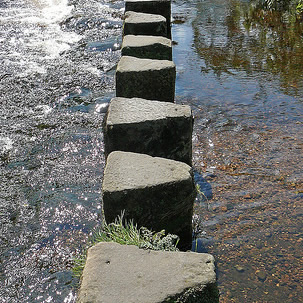
Stepping StonesWhen I was developing a recent training course I put in a tiny little section on what I call the SACI principle.


I have to admit, at the time it was pretty much an afterthought. A few minutes of filler I thought.

But the feedback I got told me it was something more.

And the more I reflected on it, the more I realised I was onto something. I'd accidentally stumbled ont a really important point.

Let me explain.

You see, we all like secrets. Silver Bullets.

We all want to know that one elusive thing that's gonna change everything. Turn everything around.

“It's not your fault”. How many times have you heard that before someone tries to sell you the latest, greatest silver bullet?

“It's not your fault. You see, you didn't know X”.

It's super alluring. The thought that if we just knew X – that one elusive thing – then we'd be a huge success.

Of course, there is no X. No one mystery or secret that's going to change our lives.

But that doesn't stop us wishing for one.

How often have you been on a training course or read a book hoping to learn a new secret only to be disappointed?

“I already know that”. You think. “Nothing new here”.

But really, the question shouldn't be whether you already know it. It should be whether you already do it.

You see, we already know the things that will make us successful. They're not complex. They're not mysteries. They're not magic silver bullets.

They're simple things.

Things like regularly keeping in touch with prospects and clients.

Things like regularly going out and networking (if that's a strategy that works for us). Or regularly getting up on stage to present. or regularly writing blog posts and articles.

The secret – if there is one – is consistency. It's doing these simple things week in, week out.

Success in business development is not determined by big, one-off, complex new strategies.

It's Simple Actions, Consistently Implemented that bring success.

And that's the SACI principle.

————

Image by Tim Green

Featured

Selling

Reason #3 You’re Losing Sales

Posted on February 5th, 2011.

Reason #1 is here, and reason #2 is here

So you've probed the client's issues and they're enthusiastic.

They've had an “aha” moment – you've shared new insights and thinking and they fully trust you're the expert in this field.

And you've explored the impact of the problem – you can see they feel the pain and they need to fix it urgently.

In short, they're sold.

What could possibly go wrong?

Reason 3: You're Selling to the Wrong Person.

This, of course, is particularly applicable when you're selling to large organisations.

Often, the person you speak to initially is either the person you found it easiest to get through to (if you initiated the communication) or the person most interested in solving the problem (if they reached out to you).

That's not the same as the real buyer.

If fact, these days, there's rarely one simple buyer for very large purchases – there's a group of people who all influence the decision in one way or another.

And it's your job to figure out who these people are and make sure you've got them “covered” – preferably by having met them face to face.

How do you find out who these people are? You ask.

Of course, you don't say “who's the real decision-maker around here?”. That's not going to make you any friends.

But during the process of your sales meeting – usually near the end when the potential client you're speaking to is enthusiastic and ready to roll, you need to ask them about their buying process:

-> Who here, apart from yourself, needs to be involved in this decision?

-> What's the process from here for important decisions like this? Who's involved?

If you don't know the answers to these questions you're “selling blind”. You could very well close the sale, but not win any work because behind the scenes, decisions made by people you don't know and have never met go against you.

Nowadays, of course, it's not always possible to meet all the key decision-makers and influencers.

Stricter procurement policies often bar you from speaking to anyone outside a small group if you're taking part in a formal bid process, for example.

If that's the case you have two options.

You can work with the clients you're allowed to speak to (and who are enthusiastic supporters) and coach them to make your case to the key decision-makers. Essentially teaching them to sell internally the way you would.

Or, you might want to consider whether it's worth investing in this bid.

Chances are the incumbent or one of the competitors on the bid already knows the key decision-makers and the odds will be stacked in their favour.

In this case, you may be better off investing your time in another opportunity.

Either way, you need to know who the decision-makers and influencers are and what their role is to make an informed decision on how to approach the sale.

‘Cos if you're not selling to the right person, your chances of winning are slim.

Featured

Selling

The Top 3 Reasons You Lose Sales: #1

Posted on January 17th, 2011.

Has this ever happened to you?

You have an initial meeting with a potential client. They asked to speak with you, or you were recommended to them – so you get off to a good start.

You ask them about their business. You talk about some of the problems they face and identify that there are things you can help them with.

You discuss what you can do and they seem pleased. They ask you to do them a proposal and you leave the meeting feeling rather pleased. It feels like this one is “in the bag”.

Then nothing happens.

Despite writing a very compelling proposal, they don't call you back. Eventually you get through to them and they explain that priorities have changed.

Budgets are tight and although they're still interested in working with you, it won't be for a while – they'll get back to you when things change.

Or perhaps they've chosen to go with a competitor. One you know won't do as good a job as you.

Sound familiar?

If it does, you're not alone. This scenario is played out time and time again for consultants, coaches and other professionals worldwide.

It happened to me again and again, until I learned three key lessons about why you lose sales. Not that it never happens now. But it happens an awful lot less.

The Top 3 Reasons You Lose Sales

Reason 1: Not Bringing Any New Insights.

These days many clients come to the table already having a clear picture in their minds of what they need and what kind of solution they want.

They may not be an expert like you – but they do their research on the web and come to you with some pretty clear needs laid out.

So you tell them about how you can meet their needs, and how you can deliver the solution they're looking for.

The trouble is, if all you're doing is telling the client that you can meet the needs they've explained to you and can provide the solution they already think they want – then you're a commodity.

Every service provider can tell the clients they'll meet their needs and provide the solution they're looking for. That means all the client has to go on to differentiate between you is price.

Of course, you'll tell them about your great service and people. Your brilliant testimonials and feedback. But everyone can say that.

You can list your USPs and differentiatiors. But the client's not interested in that. They just want to know whether you can meet their needs.

So how can you escape being painted into this corner?

You've got to bring new insights to the table. You've got to get them to change their minds about their needs or the solutions they want.

You've got to dig deeper than just asking the client what their needs are.

You've got to identify and highlight problems or opportunities they didn't know they had.

You've got to suggest different, better solutions than the ones they came up with.

If you can do this, then you're actually adding value. And you're differentiating yourself from your competitors in a real and meaningful way.

You're proposing different solutions to issues the client didn't initially specify. So your solution looks very different (and better) to your competitors.

Now doing this is not easy. You have to really know your stuff. You have to be able to challenge the client without insulting them. You have to be able to think on the spot.

But you must do it. Otherwise you're just competing on price.

(Reason #2 is here and reason #3 is here)

Speak soon,

Ian

Featured

Mindset

Accelerating Expertise – Part 1

Posted on January 16th, 2011.

Kid Playing ChessIn my posts about Authority Marketing I talk about the power of establishing yourself as authority in your field.

It's common sense really: when you're viewed as an authority, you're the default “go to” person for the difficult, challenging problems your clients have. You're the benchmark. And you'll command the high fees that being the leader in your field delivers.

One of the key components (along with enhancing your influence) of Authority Marketing is positioning yourself as an expert.

But being recognised as an expert is no easy task.

Please don't believe all the “how to instantly become an expert in your field” hype you might read on the internet.

Doing a handful of interviews with real experts doesn't make you one yourself. That gives you a valuable product to sell and some useful knowledge. But it doesn't make you an expert. Not yet at least.

Nor does endless self promotion and chatter on social media sites.

According to Professor Anders Ericsson – probably the worlds leading researcher on expertise and elite performance – becoming a true expert in a field takes around 10,000 hours of deliberate (goal-directed, feedback guided) practice.

Wow. That's 5 hours of practice every working day for 10 years.

Is that really necessary to become an expert in your specialism in consulting, coaching or other profession.

The answer is both yes and no.

Ericsson's definition of expertise is based on elite performance. An international-level concert violinist, a chess grandmaster, or one of the top athletes in a sport.

If you want to achieve those levels of expertise in your own field then yes – you do have to put in 10,000 hours of practice.

But if you're not “competing” at that level. If you're a marketing consultant who wants to be seen as the go-to expert for retail businesses in California, for example. Or you're a leadership coach focused on the public sector in the UK. In those cases, the level of expertise needed is not quite so high.

Selecting The Right Niche is One of the Keys to Becoming an Expert Quickly

By focusing on a very specific sector, geographic area or other factor, you don't have to be the leader in your field globally. What you need as a minimum is to have the expertise needed to provide significant help to your clients. And expertise at a level which puts you well above your competitors.

If you focus on leadership in the public sector in the UK, you'll rarely be competing for work against a Warren Bennis or John Kotter, for example.

So by focusing on a very specific niche, it's easier to become the recognised expert. Of course, you have to find a niche where there is still strong demand for your services. There's no point in being the recognised expert in a field where no one is buying.

It's also easier to become the recognised expert in a relatively new field. Where few people have any expertise at all, you can steal a march and become a recognised expert fairly quickly. Rather than standing on the sidelines waiting to see if the new technology or trend becomes mainstream, taking a gamble and investing your time to learn and experience the field can put you well ahead of others. Of course, the risk is that the new field doesn't become mainstream and your investment is wasted.

And selecting a niche where you already have considerable expertise helps too. If you look below the surface of the sort of work you've done, you can often find common themes and threads which you can use as a foundation for your niche.

When I initially looked at professional services marketing and sales as a potential niche, for example, at first I thought I hadn't done that much work in the field. But then I realised that for over a decade I'd been marketing and selling my professional services and the services of the consulting firms I'd been working for. So do look beyond the obvious.

Finally, and in my view, most importantly of all, find a niche you're passionate about.

If you choose a niche that you're not really interested in – then no matter how lucrative it initially looks – you'll struggle to build the enthusiasm to really “get into” it.

If you're going to invest thousands of hours into continually building your expertise over the years and strengthening your expert positioning – then you really need to love what you do.

Think of the best and highest paid sportspeople and performers in their field. How often have we heard them say that they'd do what they do for free, they love it so much?

Time and time again.

Ironically, it's that love of their subject, that willingness to “do it for free”, that drives them do the hours and hours of practice when others fall by the wayside. And that's what's given them such a high degree of skill and has earnt them so much money.

Now sure, it's certainly possible to become an expert in a field you don't love. But it ain't easy. And it's certainly not a life I'd want to condemn myself to.

So in summary – if you want to accelerate your path to expertise – find a niche that you love, that you already have some experience in, and that isn't already filled with experts.

And stay tuned for the next article on Accelerating Expertise where I'm going to take a look at the practical steps you can take to build your expertise once you've defined your niche.

Featured

More Clients Memorandum

The starting point for all great marketing is…

Posted on January 2nd, 2011.

…to build deep understanding of your clients.

The better you understand their hopes, fears, dreams, problems, issues, goals and aspirations; the better able you are to “speak to them” directly and meaningfully in their own language.

I wrote about this in a blog post a while back, using the lyrics of Lori Lieberman's song “Killing Me Softly” to illustrate the power of really speaking to your clients and prospects in ways that show deep empathy and understanding.

In many ways it's more important to showcase your understanding than anything to do with your expertise, credentials or other types of brilliance.

As leadership guru John C Maxwell said: “People don't care how much you know until they know how much you care”.

Sometimes it's expressed in the simple things. For example, I always talk about clients rather than customers. Since my clients are primarily consultants, coaches or people in the professions and that's the language they use – it makes me feel like an insider.

Sometimes building a deeper level of understanding can effect the whole way you do your marketing.

I certainly found that when I took the time to talk to clients personally, and survey them about their major frustrations a number of years ago. It turned out that many people wanted to know more about the way I market myself online and how they could do something similar.

I hadn't really put much thought into it back then. But it led to me to focus more in Momentum Club on online marketing and that's proved to be a winning formula that's helped members get great results themselves.

So how do you build up that deep understanding yourself?

The secret is to immerse yourself in your client's world. Talk to clients, ex-clients and prospects frequently about what they do and what gets in their way (in your field).

If you can, carve out the time spend a “day in the life” of your clients. Shadow them. Watch the challenges they face. You'll discover many things you can really help with that they didn't think of themselves.

You can also go a long way just by thinking in the right way. The trick is to get into specifics.

Build a “pen picture” of your ideal client. Who are they? What do they do? What motivates them? What frustrates them? What are their big problems and issues? What are their greatest hopes and ambitions?

My method for doing this in a systematic way is here:

Customer Insight Mapping

The more of these questions you're able to answer, the better you'll understand your clients, and the more effective your marketing will become.

Featured

Get Clients Online

How I Get Over 70% Of My Clients From My Website

Posted on December 19th, 2010. Clients From Website

Of all the things I teach about marketing and business development, the thing most people are interested in is “how do you get so many clients via your website?

And it's a good question to ask. The web is a fantastic equalizer – allowing small businesses like you and me to match and beat our big competitors.

We may not be able to match their marketing dollars. We may not be able to send legions of foot soldiers out networking. We can't afford the fancy agency graphics and presentations. But if we know what we're doing – we can use the web to make just as much an impact on our potential clients as they can. Sometimes even more so.

In my case, I get somewhere over 70% of my clients from my website (ie – that's how they initially found me, and that's what triggered them to contact me). And my site is ranked higher for traffic than some of the top 50 consulting firms globally.

It's not because I'm some internet genius (far from it – I've made a ton of mistakes). But I have learnt a few simple lessons on what it takes to get clients via the web. And most importantly – I've put those lessons into practice.

Which, of course, begs the question – what are those lessons Ian?

Well, first up, I have a clear picture of who my potential clients are.

Most people have an idea of who their target clients are – but they haven't really got under their skin. They don't really understand them. They maybe did an exercise at a workshop for 20 minutes once, and that's it. Or they “just know”.

But the truth is that unless you really put work into it, you don't know. Not enough.

I spend literally hours thinking about my ideal target clients. Trying to get inside their head. To understand what their biggest needs and concerns are. What messages will resonate with them and what will turn them off. I try to infuse what I write on my site or the videos I do with that knowledge. I try to create useful resources to help them with what they're really worried about.

My hope is that they'll feel like I really understand them and am on their side (in fact my hope is not just that they'll feel like that – but that I really do understand them and I really am on their side).

I don't always get it right by any stretch of the imagination. But I do get it right often enough, and with enough people that I've been able to build a “following” of sorts.

I've also learned what people who need my services actually search for on the web.

I've learned that there are two primary sort of searches. People who have a problem or opportunity I can help with usually start out searching for useful information they can use to help them. Then eventually, they may come to search for people they can hire or services they can buy.

It would be nice if everyone came looking for help. But in reality, the vast majority of searches are for information. Where most consulting and coaching websites go wrong is that they try to sell to people. They talk about how brilliant the consultant is, what fantastic benefits the services will deliver, and how great everyone says they are.

That's great stuff – and you need those pages for the much smaller number of people who come looking for someone to help. But if you want to be really successful on the web you need to have content to attract and engage with the far greater number of people who are in the earlier stage of looking for valuable information.

Catch them early with blog posts, articles, videos and other resources which establish you as an authority in your field and you're positioning yourself to be the person they turn to when they decide they need help.

To do this you need to continually research what people are looking for on the web in your field – and to be able to distinguish between the searches that lead to winning business and those that don't.

Of course, if you want to get those searchers to your site, you need to know how to get traffic.

There are lots of different ways to get traffic to your website – from paying for it through pay-per-click and banner advertising, to getting to the top of google's search results, through to getting traffic from other related websites or social media.

All of these strategies take work. From on-site optimisation and link building to get traffic from google, to writing compelling pay-per-click ads and landing pages, to forming alliances for guest blogging and article syndication.

Your best bet is to master one or two strategies. I get most of my traffic from search engines – but also know how to boost it via social media and guest blogging. Getting traffic is the “grind” of succeeding online. It almost always requires a lot of work – though once you know what you're doing, much of it can be outsourced quite cheaply.

But I've also learned that getting people to your website is not enough.

It's great to get lots of visitors and to be at the top of the google search results for lots of keyword phrases. But since most visitors won't be ready to buy when they first visit my site, I need some way of connecting with them so that I can keep in touch and initiate more direct communication.

If you want to succeed online you can't rely on clients remembering to come back to your website.

clients to websiteSome people use social networks: Linkedin, Facebook or Twitter as a way of interacting more directly with potential clients.

Personally, I use good old email.

Potential clients who sign up for my free video training course get a weekly “Insider Strategies” email from me with useful articles and tips on how to get more clients. It ensures I stay top of mind without them having to remember to come back to my site.

I've found it's vital to create the right impression with your website.

Your website needs to get across to potential clients who you are and what you'd be like to work with. I still see consultants websites these days with no About page, or just a generic description of the company. These days people want to know more about who they'll be dealing with. We like to see behind the scenes and get suspicious of businesses who don't “open their kimono” and share more information about who they are.

And these days, your website must look professional too. It doesn't have to be too slick with all sorts of clever graphics and animation. My site here is fairly simple in design.

But it must look professional. Clients make judgements about your professionalism based on what they see of your site. If it's ugly, difficult to use, and has errors on it (or even spelling mistakes) – they'll assume you won't be professional in your work with them.

Finally – and most importantly of all – I've learned you must take control of your website in your own hands.

That doesn't mean you have to do it all yourself (although these days it's pretty simple to do so).

But it does mean you have to understand it.

If you're hiring people to develop your website for you and to optimize it to get traffic, you must be able to know if they're doing a good job.

I've heard horror stories of consultants recently shelling out 5 figure sums for basic websites that have done nothing to help their bottom line.

You can't let that happen to you. You must understand the basic principles of succeeding online to make sure that whoever you hire is doing the right things to help you get clients.

Featured

Mindset

Hustle, Hustle, Hustle

Posted on December 17th, 2010.

In my experience, the people who succeed at business development are not necessarily the ones who are the best at it. They're the ones who are the busiest at it.

They're not the people with the greatest skills. They're the people with the most “hustle”.

I'd like you to do a little exercise for me, right now.

Really simple. Will only take 2 minutes.

First – write down what your top 3 sources of new clients are. It could be referrals, your website, networking, giving presentations – whatever.

Then for each of those methods – write down when you last did whatever it is. The last time you went networking, wrote an article for your website, asked for a referral.

If it's not within the last few days then the chances are you're not busy enough at business development.

In my experience, the people who get the most business from networking aren't the people who are the best at it in the technical sense. They're the people who do it the most.

The people who get the most clients from seminars? The people who run the most.

The people who get the most clients from referrals? The people who ask the most.

The people who get the most business from their website? Well, you see where I'm going.

So ask yourself seriously – how busy are you at business development? How much hustle are you putting into it.

I see far too many people “waiting” for something to drop. They put some feelers out, do a little networking, speak to a few people.

Then wait.

Don't wait.

If you're not busy with client work – do something.

I found myself falling into this trap myself recently. I read a few articles on the web about how to get clients online and kept thinking to myself “I could do better than that”.

But of course, what I should have asked myself (and thankfully eventually did) was “why haven't I done better than that?”. Why don't I get off my backside and get some better articles written, published and attracting traffic for me.

Instead of looking at others succeeding and thinking you COULD do better. Get out there and DO better.

Hustle, Hustle, Hustle.

——

Photo by Steve Edgeworth