Ian Brodie

Ian Brodie


Navigation
CategorySelling
Featured

Selling

Why Are We So Afraid Of Selling?

Posted on November 1st, 2010.

Selling Professional Services is tricky.

Most professionals intensely dislike selling. In fact, I'd go as far to say that a great many fear it.

The thought of having to sell ourselves brings butterflies to our stomachs, makes our palms sweat, and triggers all sorts of negative thoughts:

“I didn't do years of training to have to go out and sell”.

“I'm the expert here, people should be coming to me, I shouldn't have to beg for work”.

“Selling is beneath me”.

In fact, some professionals can't even bring themselves to call selling by it's proper name. They call it business development or even marketing. When really they mean selling: engaging with potential clients and persuading them to hire you.

Why do we get such intense emotions when it comes to selling?

The most common response is that it's “fear of rejection”.

But that's far too simplistic a view. What on earth is “fear of rejection” really? We get rejected all the time. What are we really afraid of?

In my experience, there are multiple factors.

Sometimes we're worried that we might damage client relationships by being “too pushy” and asking for sales.

Sometimes it's because we have a very negative stereotypical image of salespeople. The sales people we've come across are the Ricky Roma, Willy Loman “used car salesman” types and we don't want to be like them. (Apologies to all the professional used car salespeople out there who of course aren't at all like the stereotype).

But the issue I see more often than not is that we're worried what others might think of us. We're worried that by “selling” we might come across as desperate. We have a self image of a highly successful professional we want everyone to buy in to.

Of course, we make all sorts of excuses and rationalisations. The time isn't right to call. A direct mail sales letter is “unprofessional”. Clients' don't respond well to being asked for referrals.

We're none of us immune to this. I did – and to some extent still do – this all the time. I have to catch myself when I start talking to myself like this and shake myself up.

Next time you find yourself thinking like this, take a step back and consider whether this is the reality – or whether the real issue is that you're worried what the client or prospect might think of you.

And then think about how much preserving that image is worth to you. Is it worth limiting your career for? Is it worth risking the livelihood of your business – and your family for?

Sometimes we just have to get over ourselves and get on and do what's needed.

Featured

Selling

Selling Consulting Services: The Myth of "Killer Closing Techniques"

Posted on April 8th, 2010.

Mike Schultz's excellent free report “Selling Consulting Services: Forget Everything You Know About Sales and Begin to Sell Without Selling” has a great section in it on closing techniques.

At first I approached this chapter with trepidation. In my professional career I've never found closing techniques worked for me. Not only did they feel uncomfortably manipulative – the complete opposite of the relationship I was trying to build up – but clients didn't seem to respond to them as well as all the books suggested.

Maybe it was just me, I thought.

After all, all these sales gurus can't be wrong.

But as I grew in confidence and experience, I learned it wasn't just me.

The truth is that despite all the books you can buy and courses you can go on to learn “killer closing techniques”, when it comes to selling high value consulting and other professional services, they're actually counter productive. If people aren't yet convinced that they really need a service, and they're not sure that your particular one is right for them; then using closing techniques like asking if they'd like you to start on Tuesday or Thursday will push them further away.

So how do I recommend closing if it's not with techniques?

In my experience, closing is a three stage process which begins early on in your discussions with the client.

Initially, you set the stage for a positive close through the whole sales process by:

  • Confirming agreements through the discussion.
  • Addressing client concerns as they arise rather than “steamrollering” through to the next point.
  • Ensuring you drill for impact – it's understanding the full implications of the issue which will motivate the client to buy.

Next, close at the Concept level (i.e. first get agreement on what the client wants to achieve):

  • Summarise the client's priority needs, the impact of the issue and the outline of what they are looking for.
  • Check for any outstanding concerns – and genuinely address them if there are any.
  • Propose the next step – usually to move on to agreeing the practical details.

Finally, close at the Practical level (i.e. get agreement on what you will actually do together). This may need a second meeting and some further work from you to prepare an outline plan. But it's crucial that you and your potential client work together to finalise the scope and plan, for example:

  • Jointly discussing and designing the approach to the project/engagement (while remembering that you are the expert).
  • Checking for any final concerns – and addressing them.
  • Proposing moving forward together.

The idea of being able to use a magic technique to increase your sales is a very alluring one. But in the case of selling consulting or other professional services, it's a misguided one. Clients will only buy when they feel comfortable they're getting what they need from someone who's capable and who they can work with. You establish this in the way you engage with them throughout the selling process – not by using some clever technique at the end.

So how did my approach fare vs Mike's recommendations?

It turns out we're in agreement (which shouldn't have really been a surprise given I know Mike quite well). As Mike says in the report:

Selling consulting is about trust, not tricks

I couldn't have put it better myself.

—————
You can download a free copy of the Selling Consulting Services report here.

The reason Mike's giving away such a valuable report for free is simple: it's a bribe!

He and the team at Raintoday.com have just launched a new online training program on selling consulting services which they'd like you to try out: hence the “bribe” of the free report.

I chatted to Mike on the phone last week about the program and the content looks excellent. There are 6 modules, teleseminars, expert forums, and over 25 individual training sessions covering everything from developing your value proposition to starting sales conversations with rapport to getting in front of the economic buyer to crafting winning solutions to closing the deal.

Next to having your own personal business development coach or mentor, it's absolutely the best way to boost your selling skills.

They're limiting enrolment to the first 200 members who sign up and they're closing the doors on April 16.

This initial “Charter Membership” will be at only $97 per month. When they reopen the program the price will be at least double.

And as an added bonus, all Charter Members will get a free copy of the $345 “How Clients Buy Professional Services Benchmark Report” absolutely free. (As many of you know, I've been quoting the report and using it to guide a lot of my work over the last year).

You can find out more about the course here.

You should know, the Raintoday.com team have offered to pay me a small commission if any of my readers sign up for their course. I hope you know me well enough by now to know this has in no way influenced my recommendation. If you've been a reader of the blog for any time you'll know I've been a long-term supporter of Mike and the team and really respect the quality of their training.

Featured

Selling

How a Simple Piece of Paper can Transform Your Success at Selling

Posted on March 25th, 2010.

Tick tock, tick tock.

You're standing outside the boardroom waiting to meet the Senior VP of Operations for your #1 target client.

Tick tock, tick tock.

It's a vital meeting, crucial to your firm's success this year, and even more so for your own career.

Tick tock, tick tock.

The butterflies inside your stomach are bouncing around like competitors on ‘So You Think You Can Dance'. But you're well prepared. You know what questions you're going to ask. You know your “best realistic objective” and how you're going to close. You've rehearsed the objections you might face and gone over your case study anecdotes time and time again.

“Mr Jones will see you now”.

Great. Time for action. The adrenaline begins to pump as you head into the room.

You're ready. This is going to be great.

But it isn't.

Somehow, you get taken off track. He starts asking questions about your methodology. You spend too long talking about a potential issue that turns out not to be relevant.

And then your time is up. He has to leave 5 minutes early to get to his next meeting. You haven't asked half the questions you needed to – let alone achieved your objective.

“Very interesting” he says, “we'll give you a call if we need help in your area”.

And that's it. It's over. You're never going to hear from him again. You blew it.

It's not that you said anything stupid. It's just that in the heat of the moment and under pressure, you lost where you were.

It happens to all of us. And the more important the meeting, the more likely it is that you'll forget something. You won't ask about the decision-making process, or whether he's used consultants before, or how this impacts his overseas plants, or whatever critical questions you were going to ask.

And that's where the simple piece of paper comes in.

This is trivially simple. But it works. You'll probably read it and think “I don't need that”. But you do. I've been selling for over a decade and I still do this. It's got me out of a number of holes.

All you do is take out the notebook you're going to use to make notes and turn to a clean double page.

On the right hand page. Write what you normally write when you're about to have a meeting. Maybe the name of the person you're meeting, the date and an outline agenda. As normal, leave plenty of space for notes.

But on the left hand side, list all the questions you're going to ask and the things you need to remember. You can use my sales meeting planning guide to figure out what these questions are.

And since it's on the left hand page, it's not going to get in the way of your note taking. In fact, the person you're meeting with won't even know you've got a crib sheet – it'll look like the remains of a previous meeting.

See? I told you you'd think “I don't need that”. You're probably mumbling “I can remember a few simple questions” right now.

But you can't. In the heat of battle, under pressure, you will forget something vital. The more vital the meeting, the more under pressure you'll feel, and the more likely to forget you are.

It won't feel like it at the time. You probably won't go blank. But you will get distracted and sidetracked. You'll lose the flow, and you'll skip something vital. You'll only notice it afterwards, and then you'll kick yourself.

So try it out. It can't hurt, and it may well do you a load of good.

Featured

Selling

Have You Forgotten How To Listen?

Posted on March 16th, 2010.

We're sorry, we've decided to go with someone else.

Aargh. The worst words any professional wants to hear.

You did a great job, it's just we decided to go with a training solution rather than the coaching you proposed.

But hang on, I do training. In fact I'm great at it. Let me tell you about the training I do…

But it's too late.

Has that ever happened to you?

The chances are it's because you weren't really listening to your potential client. Or more accurately, you didn't ask the right questions and you made too many assumptions about what they wanted.

Listening is Sales 101. It's one of the basics. The stuff they teach in your first few days in a role with business development responsibilities.

Listening allows you to properly understand what the client really needs and how to position your services to show they meet those needs. And clients need to feel listened to. If they feel you're not paying attention to them they'll assume you'll be like that to work with and they'll decide it won't be a pleasant or successful experience.

So why do so many of us do it so badly?

Well, there are two types of people who struggle with listening: The enthusiast and the expert.

Enthusiasts are often business owners or the ideas person behind a particular service. They're passionate about their services, they truly believe in them and they're convinced that their potential clients will benefit from them tremendously.

Passion's great when you're selling. In fact it's essential. If you don't believe in your services, how can you expect your clients to?

But sometimes passion can get in the way of selling. Passion can turn into evangelising, into a one way monologue rather than a dialogue where you do most of the listening.

Experts struggle because they assume they know what the client needs without asking. The minute a client mentions the first symptom of their problem they'll jump straight to the solution. They've heard it all before and they think they don't need to know anything more for their diagnosis.

The trouble is, they're often wrong. And even if they're right, the client doesn't feel as if they've really understood the issue. And the clients themselves, because they haven't been involved in a process of mutual discovery about the issue, don't feel any ownership of the solution.

Unfortunately for us professionals – especially those of us who run our own businesses – we're often both enthusiasts and experts. It can be a deadly combination.

After experiencing a number of “I'm sorry we're going with someone else” incidents many years ago I learned to bite my tongue. I learned to pay full attention to what the client was saying, not to focus on the next clever thing I was going to say. I learned to probe their problems fully and to explore the impacts. I still make mistakes and I'm far from perfect – but it works.

In short, by learning to listen, I learned to sell.

Make sure you do too.

Featured

Selling

Downselling

Posted on February 23rd, 2010.

In the latest version of the Outside In newsletter I discuss a number of things that professional services can learn from internet marketers. Each of the strategies is something I've adopted myself or seen results from with clients.

To subscribe to the Outside In newsletter to read the article click here.

One strategy which internet marketers use a lot is the “downsell” – it's something I've rarely seen professional service firms use.

Downselling in Internet Marketing

We're all familiar with upselling and cross-selling. The downsell as used by internet marketers is where someone has declined your product or service offer (sometimes by simply clicking the close button on the web page) and you offer them an alternative product at a lower price.

The advantage of a downsell is that even if a customer doesn't buy the product you'd ideally like them to buy, they are at least buying something. That means you get some return for your sales effort. And since they're now a customer they will hopefully have a good experience with you and be much more likely to buy higher priced items in the future.

The problem with downsells is twofold.

  • First, they can be annoying. If you've pondered over a purchase and decided not to buy, it can be rather annoying to be held up and made another offer. And it might even seem desperate.
  • Secondly, they can encourage bad buying behaviour in future. If a customer comes to believe they will be made a “better offer” simply by saying no to the original offer, then they will always say no.

To counter the annoyance issue you need to make the downsell relatively pain free. Some marketers might argue that if you're going to lose a customer anyway, who cares about whether you annoy them. But in reality they may still be potential customers for the future, and they may also create bad publicity if they find the process very annoying.

To avoid encouraging bad buying behaviour, the downsell must not simply be a cheaper version of the original offer. It must be significantly different in some way which justifies the lower price.

For example, a common offer in internet marketing is a free DVD with training material on it. A downsell could be for cheaper, downloadable versions with no physical DVD.

Or it could be for less advanced training material that may be a better fit for the potential customer.

A good way to decide what the downsell should be is to survey customers to find out why they didn't by – what their main objections were. Was it price? Was the offer too simple? Or too complex? Are they actually more interested in a different area? Once you know the main objection you can offer a downsell which addresses it.

Downselling applied to Professional Services

In professional services we have the advantage that we're selling face to face – so there shouldn't really be a mismatch between what the client is looking for, and what we're offering.

But no one is perfect. Sometimes we offer a service that's more than the client was looking for. Sometimes it's just not quite focused in the right area.  Sometimes they realise they just don't have the money to afford the service we're offering. And sometimes they're just not quite convinced we're right for them – they haven't seen us in action yet.

In these cases a downsell can sometimes help.

For example, if you've been discussing a consulting project with a client, and they decided not to go ahead – perhaps a downsell to a training course in the same area for some of their team would get them to bite. After doing a brilliant job with the training course, the  consulting project may get put back on the agenda.

Perhaps you've proposed a major lead-time reduction programme across all the clients major factories – and it felt like too much to them. You might be able to downsell to a pilot in one factory.

When to Downsell

A downsell is most appropriate when you realise a client is not going to buy what you're currently offering. Don't introduce it too early – it may be you just need to work through some objections to confirm the original sale.

But if you know a client is not buying, then a downsell can work. It's best to visibly rewind the discussions. “John, it sounds like what I'm proposing doesn't fit well with what you're looking for. Do you mind if we backtrack a little and go back to some of the things you were saying about the problems you were having with your lead times?”. Then rework the problem and solution and introduce the downsell.

A downsell can also be introduced later. For example: if you ran a campaign to sell a 10 day analysis project to a qualified list of companies, try contacting the ones who turned you down a week later with an offer of a couple of places at a half day workshop you're running on the subject. It could be they were hoping to work with you – but just weren't yet convinced enough to justify the 10 day project. A half day workshop is much easier to buy – and may give them the confidence to hire you for the big piece.

In this case you must be careful and have a logical reason why you're proposing something new which you didn't throw into the original proposal.

For example, “John, we've had a number of clients express an interest in a half-day workshop on lead time reduction. It wasn't the right time to start up the analysis work together – but would you like to come along to the workshop?”

Creating downsells like this can reopen the dialogue with a client who may not have been ready to buy – but who may have been pretty close. Certainly closer to buying than a completely unqualified lead that you might be working on instead.

What's your experience?

Professional service firms often downscope an engagement if it's just too much for the client to buy. But wider downselling – particularly coming back later with a different offer – is a tactic I've not seen many firms use.

What's your experience been? Have you had successes or failures in this area. Please share in the comments below.

To read more about what professional service firms can learn from internet marketers (and get a free copy of my Referral Masterclass ebook), subscribe to the Outside In newsletter. Click here.

Featured

Selling

Are You Nurturing Your Seedlings?

Posted on February 4th, 2010.

Nurturing SeedlingsThe analogy between gardening and growing client relationships is an obvious one. Here's an example of how it can go wrong.

The sad looking picture to the right is of my onion seedlings. You may just be able to pick out tiny flecks of green amongst the vermiculite. But there's not much left.

I like gardening. And the two things I grow the most are chile plants (because I love chillies) and onions (which I hate).

I grow onions out of a sense of duty, and a bit of obsession. Back in the North East of England where I'm from (and particularly in Ashington), onion growing is a big thing. Growing big onions (really, really big onions) is a source of huge pride amongst men. The World Leek and Onion Growing Championships were held in Ashington for 28 years with the heaviest onion regularly weighing in at over 14 pounds.

As someone who grew up there, but moved away, I feel that i ought to keep up a little bit of tradition.

So every year, I buy seeds of either Kelsae or Robinson's Giant onions. And I plant them very carefully in the best growing medium. And I keep them heated in a propagator in a greenhouse at just the right temperature. And I use artificial lights to augment the daylight to make sure they get all the sunlight they need. And I keep them perfectly watered with water kept at the same temperature as the seedlings so as not to shock them.

But this year, I just plain forgot them for a week.

It was freezing outside, and I had a ton of work on my plate and a load of things to think about.

So when I went to check up on them earlier today, most of the seedlings had withered and died.

All my perfect preparation, the ideal conditions, my fancy equipment: all counted for nothing. They had no water – so they died.

And so it is when you're nurturing client relationships.

It doesn't matter how well you start the relationship. It doesn't matter if you give it the perfect conditions early on. It doesn't matter if you took them out to the fanciest restaurant or sent them the most insightful article ever. If you leave the relationship too long without “watering it” – it'll die.

And I'll now have to beg for a bunch of seedlings from my uncle who still lives in Ashington, and who will no-doubt gloat at my idiocy.

———-
So how about you? Have you got a gardening-related client relationship or business development story? Post it in the comment box below. Thanks!

Featured

Selling

What David Maister can teach us about Twitter

Posted on December 27th, 2009.

David MaisterTwitter is a bit of an enigma for most professionals. Can it be used successfully for business development? Is it an effective use of time, or a huge white elephant?
And while many commentators are pointing to the tailing off of Twitter’s previously phenomenal growth rates and the low usage amongst client decision-makers; some professionals are quietly going about their business using Twitter to win new clients.

One of the most common criticisms of Twitter is that “it’s just inane chatter”. People tweeting about what they had for breakfast, how much they enjoyed the latest episode of their favourite soap, or a joke they’ve just heard. And in all honesty, that was my initial reaction to Twitter when I was first encouraged to use it a couple of years ago.

The most common riposte to this criticism is to point out that many people don’t just tweet inanities. They tweet useful commentary or links to resources, articles and blog posts. “People are tweeting sensible stuff” they say, you just need to follow the right people.

But both sides are missing the point to some degree.

The fact is that most adult conversation is “just inane chatter” too. When we’re with our friends down the pub, talking to clients over coffee or colleagues by the water cooler we’re rarely sharing valuable business insights. Most of the time we’re talking about what we saw on TV, our plans for the weekend, what Bill in accounts is doing with Jane in HR.

We don’t build relationships with clients and colleagues by “talking shop” all the time. We do it in the gaps between business conversations. We open up a little and talk about what interests us, our views on the news, what annoys us and what makes us laugh. We talk about our family, our football team, and the funny thing we saw while on the way in to work.

David Maister (who as far as I'm aware isn't on Twitter himself) sums this up brilliantly when he says “The key to being a good communicator is talking when there's nothing to talk about”. Whether it's in your personal or business life, if the only time you talk is when there's an issue to talk about, then you're not going to build a relationship. You can see David on video expanding on this and on how to be a good listener here. (By the way, for any readers not familiar with Maister's work, bookmark this page, head on over to davidmaister.com, and take in the wealth of articles, video and podcasts. I'll see you back here when you're done – perhaps in a month or so…)

And it's exactly the same on Twitter.

Yes, it's great to post useful tips. You'll build your credibility no end by sending out links to great articles and blog posts in your niche, including some of your own.

But you won't build relationships.

Relationships are built by engaging at a human level with the other party. That means two-way communication, not just one-way broadcasting – no matter how great the material you're broadcasting is.

And two-way communication will inevitably include idle chit-chat. if you're genuinely interested in the other person then you'll be interested in their views on the news, what they're planning for the weekend, and perhaps even what they had for breakfast.

Case in point: a few weeks ago I engaged in a short twitter exchange with a professional I know reasonably well about karaoke tunes. A couple of other folks he knew joined in. We made fun of each other's selections, and suggested putting a karaoke band together. Nothing of any “value” was tweeted. No great insights or anything business related. But we all got to know each other a little better. We now have a shared experience: something to make a little joke about next time we meet online or in the real world. We know a little more about each other's personalities (and our taste in music). Pretty much the same as if we'd been introduced at a party or other casual encounter.

In fact, in some ways, Twitter can provide a real shortcut to building relationships. In the face to face world, it often takes some time to get beyond the “what do you do?” stage of conversation when you first meet someone. But on Twitter, most people seem quite willing to share their thoughts and ideas on a whole range of more personal topics. It's often possible to get a real insight into someone's personality, likes and dislikes quite quickly on Twitter – something that would take many meetings, often over months with face-to-face networking.

And because Twitter is still a fairly new channel, many users share a sense of being part of an “early adopter community”. They're much more willing to interact and respond to messages than they would be on other more established media.

So next time you hear someone complain about how all people tweet is nonsense, just smile and agree. And take note of David Maister's wisdom: it's that nonsense which actually builds relationships.

Featured

Selling

Get More Clients Podcast: Interview with Tom Searcy of Hunt Big Sales

Posted on November 27th, 2009.

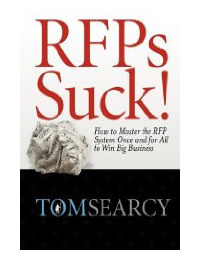
RFPs Suck!If you've been reading my blog for a while you'll know I'm a big fan of Tom Searcy's new book RFPs Suck! It's the first real coverage of how to win business by effectively responding to Requests for Proposals and Tenders.

As all professionals know: RFPs and tenders are becoming increasingly common. It's no longer possible to ignore or avoid them and focus on relationship approaches to developing business. More and more large companies and government organisations are mandating the use of formalised RFP processes. If you want to win big projects, you have to know how to win tenders and RFPs. And Tom's book is by far the best guide I've seen to doing so.

I caught up with Tom via teleconference recently and asked him a few questions on how professionals can improve the way they deal with RFPs. Tom gave some great insights into RFP-winning strategies we can all learn from. A couple of the areas covered include:

  • How to decide which RFPs to respond to and which to avoid
  • How to overcome barriers to accessing key personnel
  • How to differentiate your response from your competitors
  • How to overcome large companies fears of dealing with small professional firms

The line is a bit crackly – but the content is sparkling!

Subscribe To The More Clients Podcast

You can get a copy of the book in the UK here: RFPs Suck!

Or in the US here: RFPs Suck!

Tom's site Hunt Big Sales contains a load of great articles, blog posts and free e-books. It's well worth a look.

PS Tom's just emailed to say that the book is now available in paperback in the US: RFPs Suck! in paperback

* Disclosure: The links are amazon affiliate links. If you buy through those links I get a few pennies.

Featured

Selling

Dealing with a "Stonewall"

Posted on November 9th, 2009.

Stonewall reactionOne of the situations I've always found it difficult to handle in business development is when a potential client you meet “stonewalls” you.

In other words, they don't respond or react to what you're saying.

I rarely get this reaction nowadays – for reasons we'll come on to later. But early on in my career when I first started taking on consulting sales roles rather than just delivery roles it was something I encountered a number of times. It's worth taking a look at some of the reasons why you might get this reaction from potential clients, and what you can do about it.

The first reason you might get a stonewall reaction is if the client is not expecting a sales meeting. In particular they're not expecting to be asked about or to talk about their own business or challenges.

This can often happen if you've been referred in to the client, or if your firm already has a relationship with the client and you're brought in to cross-sell other services.

Often the way the meeting has been set up in these cases can leave something to be desired. The potential client is often just told that you'll be there to share information, or present some new ideas or techniques.

The referrer or person in your firm who holds the relationship with the client feels they're being helpful by inviting you in – but doesn't want to go as far as saying to the potential client “I think you need help in this area, and this meeting is about seeing if that's the case”.

So part of the solution here is to be very clear about when to call you in, and how best to position it with the client. You should only be brought in if your colleague or referrer thinks the potential client really could need your help – preferably with a specific problem. And it's best to agree that with the client up front. Even if it's only to say “he'll talk about some of the best practices we've seen, and ask you a few questions about your business to see if they might apply to you”.

They have to create the expectation that you will be probing and asking questions about their business to identify a fit – not just presenting some material for their education.

If that pre-positioning hasn't been done, then it's imperative that you at least know about it. Then at the start of the meeting you can clarify what you'll be doing and that you'll be asking them questions and looking to see if there might a fit. You may want to consider not holding the meeting if it hasn't been set up correctly.

The second reason why the client might stonewall is if you don't really give them the chance to interact.

In my early days I tended to present at potential clients rather than discussing things with them. I was an engaging enough presenter, and I'm sure they learnt a lot from the presentations and it might even have worked to establish my credibility.

But the style I used didn't work to get them interacting with me.

It's something that's difficult to describe in words, but there are ways of presenting – the tone of your voice, the way you make eye contact, pauses you put into the material – that invite discussion. You can use almost the same words, but be much more likely to generate a reaction or response.

In the early days, the way I was presenting was sending out the signal “you're here to listen”. The potential client was placed into a passive mode where they sat and listened – but didn't talk about how what they were hearing might relate to their own business.

The third cause of stonewalling is the client's own reluctance or fear of engaging.

This can be for many reasons. they may fear you're going to try to “hard sell” them – and so don't want to open up. Or they don't perhaps want to admit to having problems in their business – they may be embarrassed, or not want to appear “weak”.

Getting over this fear has a lot to do with how you handle yourself in the meeting and the impression you create. You need to build rapport quickly, and to demonstrate that you're someone safe to open up to. You're not going to push product at them, and you're going to be understanding and empathise if they share their challenges with you.

Doing this isn't about using tricks and techniques. It's not about mirroring body language or using “hypnotic” words that magically make people like you.

It's about genuinely being interested in, and caring about the other person. It's about actively listening and trying to understand rather than just listening for gaps to come in with your own clever statements.

It's also about recognising when you need to challenge the other person. Today, if a potential client who has asked me in to talk to them doesn't really open up or answer questions then I now have the confidence and courage to pick them up on it.

I'll sometimes ask a very straight question: “Look, you don't really seem interested in the examples I'm giving, and you don't seem to have any problems in this area it's worth talking about. Yet you were interested enough to invite me in to talk to you today – so there must be a reason or something you want to discuss. Rather than dancing around – is there something specific we should be talking about that would be helpful for you?”

It doesn't always work – but it's a lot more likely to work than constantly talking at a stone wall.

Featured

Selling

Can You Get More Clients Simply by Asking for More Referrals?

Posted on September 20th, 2009.

beggingAlmost all professionals say their main approach to get new clients is Referrals.

But sadly, what they're often talking about is Passive Referrals. Referrals where they've been recommended by a previous client or contact without taking any active action themselves.

While it's great to get these types of referral it's not really a sustainable business model. A sustainable business model needs to be influenceable by the professional.

In practice, a great many professionals have a psychological barrier when it comes to asking for referrals. They hesitate – and don't ask for anywhere near as many as they should.

There are three main reasons for this:

  1. They're not convinced asking for referrals works
  2. They're worried that asking for a referral might damage the relationship they have with a client or contact
  3. They're embarrased asking for referrals: it “feels like begging”

Does Asking for Referrals Work?

In their 2009 Benchmarking Study How Clients Buy, RainToday.com looked at which methods buyers of professional services were most likely to use to initially identify and learn more about providers.

The top 2 methods? Referrals from Colleagues and Referrals from Trusted Service Providers.

Top 5 sources of information on new services providers

Take, for example, the experience of one of my newsletter subscribers who recently emailed me to say:

On a visit to a client, where I had done a good job and over-delivered on client's expectations; we were waiting on someone returning to his office with a bit of information we needed.

For something to say I asked “Can you think of anyone else who might be able to use my services?”.

He immediately opened his address book and started giving me names and numbers, even ringing a few there and then to warm things up.

I've since made contact with most of the nine names he gave, and seven are happy to meet with me.

In future I'm going to make “asking for more” a part of my after sales follow-up!

Does Asking for Referrals Work? Absolutely – if done right.

Will Asking for a Referral Damage your Relationship with a Client?

There's an element of truth in this – if you do it wrongly.

The best referrals are to people the person doing the referral knows well. After all, we're far more likely to act on a referral from someone we know and trust than from someone we barely know.

By introducing you to someone they know well, your clients and contacts are putting their relationship and reputation on the line. Before the do this, they will need to be sure you're going to do a great job for the person they introduce you to – and that you'll be thinking in their best interests.

So you must wait to ask for a referral until you've proven you can do a great job and that you aren't just being self-centred.

The best way to do this for clients is to ask after you've over-delivered on your engagement for them. Or if it's a long project, after you've delighted them during the process of delivery.

And your relationship must have progressed so that they've come to trust you and see that you aren't just in it for yourself – that you always act in your clients' best interests.

The language you use when asking for a referral can help here too. Don't just ask if they can refer you to someone. Ask “can you think of other accountancy firms who I might be able to help?” or “I believe my services would be really valuable to Jones & Co., if you were me how would you approach them”.

Is Asking for Referrals Embarrassing? Will it seem like Begging?

Again, the answer to this is that it can be – if you do it wrongly.

Part of this is mindset. If you really are just asking for referrals to help yourself – then clients and contacts often pick up on that.

But if you've thought through who it is you can really help, and you truly believe you can do a great job for them: then your sincerity will show through.

Again, the language you use can help. Don't just ask to be referred. Tell your client or contact why you believe you can do a great job for the person you're asking for a referral to.

In my blog post of a few months ago: How to Get More Referrals Using Offers I showed how creating tailored offers (free, or entry-level) makes it easier for clients to refer you and feel comfortable they are adding value to their contacts. Having these offers also makes asking for referrals less embarrasing. You're able to name something specific of value the person you're being referred to will get – rather than just asking a favour.

Could You Get More Clients by Asking for More Referrals?

Have a look at the 3 factors. Do they apply to you?

My experience is that we all suffer from at least one or more. Myself included.

We've not fully convinced ourselves that asking for referrals really works. Or we're embarrassed to do it, or worried it might hurt relationships.

Whichever negative belief you have, think about whether that belief is really true.

Think about whether holding that belief is helpful to you.

Then think: if I suspended that belief, just for a week, and asked for more referrals, might that help me?

I bet it would.