Ian Brodie

Ian Brodie


Navigation
CategorySelling
Featured

Selling

Selling With Stories: Answering Tough Questions

Posted on September 8th, 2009.

18 months ago I posted a very popular article on Selling With Stories where I described how stories and anecdotes can be used to great effect by professionals to provide more meaningful, resonant descriptions of what we do and how we work.

Stories are also particularly effective when we're asked those tricky questions that clients like to throw at us when we're pitching for business.

Faced with “what would you do if…” and “how would you handle…” questions, there's a great temptation for professionals to try to demonstrate their expertise by trotting out management, legal, accounting or other theory for how situations should be handled.

But that's not what clients actually want to hear. They want the confidence that you have handled these situations and that you will be able to deal with them in practice, not in theory.

The best way to handle these questions is with a short story or anecdote about a client situation where you faced such an issue and were able to address it.

When I sold and delivered large consulting change management programmes, I had a series of stories about overcoming resistance, stories about programme management, stories about delivering results and stories about culture change. Each of these gave me credibility when a client asked how we could address the organisational obstacles to change, or how we could make sure they really achieved the benefits they were looking for from the programme, etc.

Some stories are reusable for multiple situations. One of my overcoming resistance stories about a senior executive in a client organisation who had been overlooked for the CEO role and initially wanted to obstruct any initiative launched by the CEO also doubled as a story about how to address executive politics.

Sometimes the story doesn't even have to be of a great success to be effective. About 5 years ago I won a rather nice multi-million Euro sales process implementation project for the consulting firm I was working for. We'd had a tricky relationship with the client and found out later we were in last place coming up to our final presentation. The turning point came when the senior client executive told us that all previous sales process projects he'd known had failed because the consultants hadn't engaged with the front-line staff. I was able to tell a story about how I'd learned the hard way in a previous project where we hadn't involved the key salespeople and first line managers early enough and so had struggled with implementation until we eventually got them on board. It wasn't a story about a great success we'd had – but it told the executive that I'd been in that situation before and I wasn't going to make the same mistake again. We won the project, and in a debrief meeting later the client told us that had been the key moment when they knew we had the right practical experience to work with them.

These “early lessons” stories can be even more effective than success stories as they're highly believable, don't come across as pompous or “show offy”, and really send a clear message that because of that hard lesson you've known what to do right ever since.

Of course, the “early lesson” type story has to be set a decent distance in the past – it can't be a mistake you made the previous week!

Most professionals should be able to create a list of tricky questions they often get asked and prepare example stories to address them. They're best not replayed verbatim as stock answers, but stored away as an easy-to-recall memory to build on.

And using stories to answer tough questions is not only more believable – it's much more interesting than a dry theoretical answer too.

Featured

Selling

Get More Clients by Asking Better Questions

Posted on August 24th, 2009.

Get More Clients By Asking Better QuestionsIt's no secret that asking good questions is the key to successful selling.

And in theory, professionals should be great at asking questions. It's one of the main tools in their armoury when they're working on an engagement. The skill of consultants, lawyers, accountants, architects and other professionals to question to get under the skin of a client's problems, needs, ambitions or issues is critical to their ability to resolve those issues.

But questioning to sell is different.

When we question as part of an engagement we primarily drill for root causes and underlying needs. We explore every angle to ensure we develop the right solution.

But when questioning to sell, we need to primarily drill for impact. It's helping clients understand the full impact of their issue, problem or ambition that will make the difference between the client hiring us or not.

Why is that?

Well, in the majority of situations when dealing with clients, we're the experts and our clients aren't. One of the characteristics of being an expert is that we're able to see things – to make leaps of logic and insight – that our clients can't.

An HR consultant, for example, intuitively knows that low morale amongst customer service staff takes a heavy toll on productivity, employee turnover and service levels. When she spots a a morale issue she knows just how serious it is. But her client often doesn't.

Because she's the expert, she jumps quickly to talking about possible solutions to the problem – hoping to demonstrate her expertise and impress the client. But because the client hasn't seen the true impact of the situation, the solutions look expensive and unnecessary.

Instead, she should ask questions to help the client understand the true depth of the situation. What is employee turnover in customer services like? How much does it cost to replace an employee who leaves? What about the impact on customer service levels of high turnover? How does this affect sales? etc.

These smart, impact-focused question not only demonstrate expertise, they help the client realise how important an issue low morale is. Then when a solution is proposed, it won't look out of kilter with the size of the problem.

How do you get good at asking impact questions? Start by listing the typical problems your services address, or opportunities they enable. Then for each problem or opportunity brainstorm a full and broad list of the potential impacts. It's even more powerful if you can identify how these impacts can be measured and converted to their effect on the bottom-line.

That list of impacts can then be used to create powerful questions that really help clients see the severity of their situation. And that, more than anything else, will help motivate a sale.

Featured

Selling

Want to Sell More? Have Something Better to Sell.

Posted on August 14th, 2009.

I spend the majority of my time helping my clients get better at marketing & selling their services. We look at marketing strategies, lead generation techniques, sales processes and skills. The “how” of business development, if you like.

So sometimes it's easy to forget the “what”. The stuff you're actually selling. And the fact that the most important thing is to have really great services to sell.

Not only that, but we need to have a range of services too – and they need to be configured and positioned in meaningful terms for our clients.

It's a problem particularly prevalent amongst consultants, coaches and trainers. Our “product” is so flexible and configurable that we tend to only describe one generic service: we'll “figure out what your problems are and fix 'em”.

Unfortunately, we often assume too much. We're experts in our capabilities: we know how much they can be tailored, how we can tweak them to exactly meet our clients' needs. Our clients however, aren't so expert. They often can't tell whether we can help them with their problems and opportunities or not.

What we usually do is bang away trying to sell the same generic service using multiple, different marketing & sales approaches. What we should be doing is changing what we're offering. Getting more specific. Figuring out the different benefits that could be achieved and packaging up a service for each one.

Next time you're reviewing your marketing & sales approaches, consider whether your time might not be better spent reviewing your services instead and better matching them to what your clients really want.

Featured

Selling

How to Run Effective Client Meetings – The KFC Approach

Posted on July 17th, 2009.

Meeting PlannerHow many meetings with clients have you been to that were aimless, unstructured and poorly planned?

If you're like most professionals, probably quite a few.

The problem's particularly acute when it comes to business development meetings: your first few meetings with a potential client when you and they are trying to figure out whether you should work together. Make a mis-step here and the relationship is over before it's begun. Yet so many professionals try to “wing it” with little preparation and only vague objectives for the meeting such as “get to know each other” or “find out their issues”.

Set up your meetings like this and you'll find that time after time your opportunities progress as far as the first or second meeting – but no further. From the client's perspective they simply can't afford to invest time in meetings with professionals which don't seem to be going anywhere and where they don't get value from the event itself.

A Structured Approach to Client Meetings

UK Copywriter Andy Maslen has a neat acronym to help writers approach sales copy. And the approach can be extended very effectively to client meetings too.

The acronym is KFC:

K – Know

F – Feel

C – Commit

It starts with Commit. At the end of reading the copy (or in our case, at the end of the meeting) what do we want the client to do – to commit to? For sales copy it could be to pick up the phone, fill in a form or click to buy. For a business development meeting it could be to agree to a follow-up meeting to discuss a specific topic in more detail, or to introduce the professional to a senior colleague. Then, you figure out what the client or potential client must Know and Feel for them to be comfortable making the commitment.

Start With a Clear and Realistic Objective

Every client meeting must have a clear objective of what you want to achieve from the meeting. And in particular, you must identify what you want them to actually do as a result. Because if they don't do anything differently as a result of the meeting then what was the point?

Even if your goal is primarily to progress the relationship in some way – that progression needs to manifest itself in meaningful action. It may be something simple like providing more information, or making an introduction, or agreeing to a joint follow-up – but it needs to be something or the relationship really hasn't progressed.

Make the objective realistic too. Your end goal may be for them to hire you – but that's unlikely to happen in your first meeting. Winning business in professional services is more like a courtship than a “one night stand”.

A more realistic first meeting objective is to jointly agree on the key challenges the client faces that you could help with, to hold a follow-up meeting to explore these in more detail, for the client to do some homework and bring more details and data on the specific area, and for you to bring along some examples of similar work you've done for other clients.

Identify the Critical Success Factors for Achieving the Objective

Having a clear meeting objective is important (and it's surprising how many professionals don't actually do it) – but on it's own it's not enough.

You need to think through what it will take to achieve that objective in the meeting. That's where the K and the F come in.

So if your objective is to get a follow-up meeting to discuss a specific area to work on together – what will the client need to Know and Feel for them to agree to that?

Know is about facts. Perhaps they need to know the areas you work in, the types of clients you've worked with before, or that you're a real expert in your field. That will begin to give them the confidence that you have the skills to work on their problem.

Feel is trickier – but often more important. What do they need to feel to commit to your objective. Perhaps they need to feel that you understand them, that you're “on their side”. Perhaps they need to feel that you've really listened to them, or that you're a person they can trust.

How do you get your client to Know what they need to know and Feel what they need to feel? That's the art of business development.

Use Smart Questions to Help Clients “Know and Feel”

Firstly, recognise that you certainly won't effectively get across the right knowledge and particularly feelings through a long presentation about you and your company. That might get across some of the right knowledge – but it will create entirely the wrong feelings. Your client will feel that you're more interested in yourself than them – that you don't listen – and that meetings with you are going to be deathly dull.

One way to get across your knowledge and experience that doesn't come across as dull and self-promotional is to use short stories and anecdotes of similar client situations. I go into more details on this in my post on Selling With Stories.

Most often, the route to both establishing the things the client needs to know, and in getting them to feel the right way about you is to ask smart questions. Being able to ask the right questions that really home in on tough issues and the underlying causes will establish your expertise far more than any claims you might make about it, qualifications you might have or awards you might have won. And by empathising with the responses and occasionally mentioning similar situations you've been in, you'll establish the right feeling of “he understands me” and “he's been in this situation before – he'll know what to do to help”.

So the bulk of your preparation and structuring of the agenda for the meeting should be on the questions you need to ask to both find out what you need to know – but more importantly, to help the client know and feel the things you identified were critical for them to then be comfortable agreeing to the objective.

Close by Asking for a Commitment

And finally, of course, you must close by asking for that follow-up meeting, or the introduction you were looking for, or at the end of a series of meetings – actually asking for the business.

Sounds obvious: but so many professionals fail to do it. Fear of rejection kicks in and they close weakly without making a clear request for the action they're looking for. And so it doesn't happen.

But if you've planned and prepared correctly. If you've structured the meeting to cover all the bases necessary to help the client know and feel the right things – then they should be perfectly comfortable committing to the desired action.

PS You can download a free copy of the meeting planning template I use (as in the picture) here

Featured

Selling

Sales Velocity: The Hidden Lever

Posted on April 21st, 2009.

It seems to be a trend at the moment amongst sales gurus to highlight that “there are only three ways to increase sales”: More leads, higher conversion of leads to sales, and more revenue per sale for example.

Leaving aside the fact that pointing this out is hardly a revelation – and that the real value comes not from naming the three levers, but from actually figuring out the best way of “pulling” them for a specific business; in fact there is another, often overlooked lever: velocity.

Sales velocity is the cycle time of the sale from initial lead to closing. Complete that cycle faster, and you free up time to work on another sale. Double the velocity of each sale – and you can sell twice as much.

Of course, it's not that simple: of all the sales levers, velocity is often the most difficult to improve. Push too hard too fast and your potential client will push back. There's often an optimum pacing for each sale and to go faster than that optimum can in often lose you the sale completely.

Veteran salespeople are used to naive sales managers pushing them to try to accelerate a close to hit this month's or this quarter's targets. But there's a huge risk that pushing to hit an internal target can damage your chances of making the sale. And it's one of the easiest negotiating weapons for purchasing professionals: if you know when your salesperson's quarter-end is you can often get a huge discount by timing your purchase right so that the salesperson gets desperate as the end of their reporting period looms.

But putting that aside – velocity can often be a valuable area of focus for improvement for salespeople – simply because most salespeople rarely consider it.

The best way of looking at the sales velocity lever is not to think about speeding up – but instead to think about avoiding delays and removing roadblocks.

Roadblocks can take many forms: you don't identify underlying client concerns early enough and as a result they hesitate to make a decision; you forget to follow-up on time or wait for your client to take the initiative; you're not aware of the timing of financial approval committee meetings in your client's company and as a result your client misses the deadline for submission and has to wait a quarter.

One of your key jobs as a salesperson is to know what these roadblocks are likely to be and to make sure they don't happen. Work to surface concerns early on and address them, never be late with follow-up, understand the client's decision-making process (see my post Avoiding the Treacle Effect for more details of this one).

Your first step though is to understand the impact of velocity: simply put, halving the cycle time of a sale can have as much impact as doubling your conversion rate or number of leads. Having that message in the front of your mind, should help you pay attention to this hidden lever and suddely you'll spot opportunities to avoid delays and remove roadblocks.

Happy driving!

Ian

Featured

Selling

Book Review: How to Win a Pitch

Posted on March 31st, 2009.

If you're short on time, here's my review in a nutshell: Buy this book.

Before the full review though, an admission: I hate the word “pitch”.

Now don't get me wrong, I've been involved in more than my fair share of pitches; won (and lost) multi-million pound consulting contracts as a result of “beauty parades” and “bake offs”. And I've learnt what works for me by learning from my mistakes and watching true experts perform in the field. But for me, the word “pitch” brings up all the wrong images: slick haired, dark suited, fast talking professionals who pitch at the clients rather than engaging with them.

So in truth, when author Joey Asher offered to send me a review copy of How to Win a Pitch, I wasn't really looking forward to it. I was expecting the usual platitudes about dressing well, body language and performance skills.

I couldn't have been further from the truth.

What the book does deliver is a no-nonsense guide to the key fundamentals needed to win sales pitches. Page after page I found myself nodding in agreement, or occasionally thinking “great so far – but I bet he doesn't cover X” – only to find it explored in detail a few pages later. And I don't just mean coverage of the basics – there was plenty in here that was new to me – despite my years of experience.

Asher's five fundamentals are simple: ensure that the pitch is

  • Focused on a business solution
  • Simply organised
  • Delivered with passion
  • Interactive
  • Well-rehearsed

As he points out, so many pitches are done so badly that simply doing well on at least some of these fundamentals can significantly differentiate you from your competition. But the book doesn't settle for that – it delivers rock-solid techniques and methods to excel in each area.

Take the first fundamental: focusing the message on the business problem. Rather than just stating that this is important, Asher delivers a strong questioning methodology to enable this (and more importantly – highlights the importance of genuine listening over using techniques), and then gives multiple examples of solution focused pitches for the reader to learn from.

This is repeated throughout the 5 fundamentals. Strong advice, strong examples, elegantly and effectively communicated.

And make no mistake – these fundamentals are absolutely vital – but often overlooked. The number of senior professionals I've seen violating Asher's principle of rehearsal, for example, is simply staggering.

This book is one of those rarities that presents a simple framework that “beginners” will be able to understand and use – yet still crams in multiple gems of wisdom and insight that even highly experienced sales people will learn from.

If you get involved in sales pitches and presentations in any way (and if you want to sell big, there's no doubt you will) – then you must buy this book.

Ian

*** Update *** Joey has just emailed me to say that the book will be in stock at Amazon on May 17th. But if you want a copy now you can buy one at www.howtowinapitch.com.

Featured

Selling

Sales Excellence Podcast – Episode 2 : Let's Get Real – An Interview with Randy Illig

Posted on February 18th, 2009.

The Sales Excellence PodcastBack in 1999 “Let's Get Real or Let's Not Play” was published. It was a groundbreaking work – one of the very first books to focus on selling for consultants and other professionals; and one of the very first to take the stance that selling should be about seller and buyer working together to achieve mutual objectives – not one trying to manipulate the other.

10 Years later, and Let's Get Real is back on bookshop shelves with a new edition, with additional chapters on “advocacy” and initiating new opportunities.

I'll be publishing a review in a few days time (I'll let you in to a secret – I'm a big fan). Co-author Randy Illig generously offered to by interviewed for the blog – and in this podcast you can hear the full interview. In it, I ask him questions on:

  • The changes in the sales environment for professional services over the last decade
  • How salespeople with limited contact networks can still use referrals to generate high quality opportunities and business
  • What experienced professionals starting out in business development should focus on
  • His one best piece of advice for new salespeople

Randy gave some really interesting and insightful answers – listen to the podcast below:


Featured

Selling

Sales Excellence Podcast – Episode 1 : Selling With Stories

Posted on February 17th, 2009.

The Sales Excellence PodcastStories and Anecdotes can be one of the most powerful tools in the professional's sales armoury. And yet they're often overlooked in favour of more rational approaches: facts, figures and statistics.

However, those who learn to sell with stories find that they gain credibilty, are able to make complex ideas more concrete for clients, and are able to challenge clients effectively without getting into face-on confrontation. They are able to create a powerful emotional connection with their clients and prospects that those following a “facts and figures” approach simply can't match.

This 12 minute podcast – the first in the Sales Excellence Podcast series – looks at how stories can help in selling, and shows how professionals can develop a bank of stories which can be used in key selling situations to enhance thier credibility and believability.

Listen now:


Featured

Selling

The Number One Skill in Business Networking

Posted on January 9th, 2009.

Business NetworkingBusiness Networking is a vital sales tool for professionals and salespeople alike – yet it's one that many people struggle with.
I've seen a lot of great advice given over the years – but very few people touch on what I have found to be the most important skill of all.

Most networking advice focuses on what to say – how to position yourself, how to answer the “what do you do?” question, how to get people interested in what you have to offer.

This is all important stuff – but there's something that can have a much bigger impact on your networking success than how you describe what you do.

It's the simple technique of asking them what they do first.

Most networkers rush far too quickly into talking about themselves. They're so passionate about what they do and what they have to offer – and so desperate for the other person to understand this – that their discussion becomes more of a monologue.

The reality is that networking is a long term game – and the initial meeting is the very first innings of that game. No one is going to start buying from you or referring business to you after a 5 minute chat. So there's no rush to blurt out all the details of what you do. What is vital is for you to make a good impression – to be seen as someone worthy of continuing a discussion with and finding out more about. And what sort of people do we like talking to? People who are genuinely interested in us and let us talk about ourselves. Not people who dominate the conversation and talk about themselves all the time.

But even more importantly than this, being the first to ask “what do you do?” and to focus on the other person gives you 6 major advantages:

  • You can figure out whether the other person is a potential customer or a potential referrer for you – and adjust your “elevator speech” accordingly.
  • By learning about what the other person does and what they're interested in, you can see how to best pitch your services to hit the right “hot buttons” for them.
  • If you have multiple services to offer you can identify which is the most appropriate for them and focus on a powerful specific message for that – rather than using a generic “catch all”.
  • By listening to the way they communicate and the language they use you can identify the best way to communicate with them in a compelling manner.
  • You may be able to pick up specific areas where you can help them straight away – people to connect them too or resources to point them at. By adding value for them before you've even talked about yourself you'll make a tremendous impression.
  • And, of course, by listening first you'll be seen as empathetic and understanding – just the sort of positioning you want as a trusted advisor.

And one more subtle bonus – by focusing on being the first to ask “what do you do?” and then on listening, you're really taking the pressure off yourself. No need to worry about have a word-perfect pitch – even the clumsiest amongst us can ask a simple question and then listen. So by the time you get asked the return question (and if you've listened well – you will get asked), you've already built up a good rapport with your conversation partner – and your side will be listened to more attentively and more sympathetically.

Ian

PS – for more resources on effective business networking hop on over to the site of the UK's leading networking guru and all-round nice-guy Will Kintish.

Featured

Selling

Understand Your Client's Beliefs to Learn How to Sell More

Posted on December 3rd, 2008.

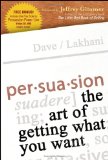
I was listening to an audio version of Dave Lakhani's book Persuasion today and he made a point which really made me sit up and think.

His point was that when persuading – or in our case when selling – it's critical to understand the underlying beliefs of the person you are trying to persuade.

People tend to demand far more evidence for a statement or recommendation that clashes with one of their existing beliefs than they do for one that is more in line with what they already believe. So as a sales strategy, it's usually far more effective to work to position your recommendations as building on an existing belief than to have to challenge and overcome one.

In reality, most salespeople rarely think consciously about the beliefs that might be impacted by what they are selling. But a little thought can cast a great deal of insight and help shape a more effective strategy.

For example, if you're selling some form of management consultancy services then it may seem that what you're doing doesn't challenge any significant beliefs in your potential client. After all, you are highlighting ways for them to improve their business by using your services – what could be challenging about that?

Beliefs Can Overwhelm EvidenceBut if what you are proposing to do falls under the remit of the potential client or other person with influence over the buying decision then you had better be careful. It could well be that a belief you are challenging is their belief that they need to be seen as not having any weaknesses in their capabilities. In other words, if they need you to help them, doesn't that make them a bad manager? Shouldn't they be able to do this stuff themselves? Very often potential clients are seriously concerned about whether hiring you may make them look weak in the eyes of their managers, staff and peers. What you are selling challenges their belief that they need to be “on top” of all the activities in their remit.

For this reason, when selling consulting services I always look for a “get out clause” for my clients. A reason why it's OK for them to need me that isn't damaging to their self image and their fear of what others might think. I explicitly look for a rationalisation for why they can't do this themselves. There has been a change in what customers need that they couldn't have been aware of, for example. or perhaps they need to focus on managing their team and optimising today's performance while someone with an “objective viewpoint” looks at their strategy. The logic doesn't have to be iron-clad. Just something to make them feel at ease and comfortable hiring me without feeling they are admitting failure somehow.

Of course, different issues will arise in different selling situations – but it's surprising how often what seems like a purely rational buying decision will have a powerful emotional dimension due to the impact of the decision on the underlying beliefs of the buyers.

Ian

* Image courtesy of Skeptical Enquirer magazine.