Ian Brodie

Ian Brodie


Navigation
Searchtime
Featured

Selling

3 Quick and Simple Steps to Improve Sales in Professional Services Firms

Posted on June 18th, 2008.

3 quick and simple steps that professional service firms (lawyers, accountants and consultants) can take to hugely improve their sales:

  1. Cut the marketing and advertising budget in half
  2. Take the money you've saved from this and use it to reduce the billable hours targets of your partners and get them to focus on business development activities instead
  3. Ensure that the business development activities are being carried out effectively

Typically professional services firms spend too much on ineffective “getting our name out there” marketing and advertising – and don't spend nearly enough money and more importantly time on more direct business development activities.

Professional services are complex, intanglible products. Before people can buy, they must know that you are credible and that they can trust you.

Activities which can build credibility and trust include: getting referrals from people your clients trust, speaking at client industry conferences, networking at client industry events, writing and publishing relevant articles (in publications your clients read), organising small-scale seminars, performing and publishing relevant research and face-to-face issue-led discussions with clients.

And, of course, having a content rich website.

They don't include generic corporate advertising and marketing.

Onward!

Ian

Featured

Strategy

Positive Navel Gazing: Won Sales Analysis

Posted on June 8th, 2008.

Review formAlmost every company I've worked for has done regular “loss reviews” when they've failed to win big bids. It was almost a knee-jerk raction by management – “how can this possibly have happened?” – despite the fact that the sales team often knew well in advance that they weren't going to win.

What I see much less often are “win reviews”. Rather than just celebrating a win, analysing it to figure out why you really won, to see if you could repeat that success elsewhere.

In my experience,these win reviews are much more likely to produce future success than loss reviews.

The reason is simple. Loss reviews focus on trying to identify the reasons why you didn't win – “mistakes” – and change them for the next time. But in reality, the reasons why you don't win are usually much less likely to be fixable mistakes than they are to be inherent features of your products and your company. Things which are very difficult to change. Perhaps your culture didn't fit, or your high quality product line wasn't suitable for a low cost customer.

A win analysis however, tries to identify the factors that secured your victory. These factors are almost always things you can repeat. The important thing is to find more customers where these factors are valued.

The trick in both cases is not to try to change unchangeable things (of course, if you do find mistakes then fix them) – but instead to identify which types of customer value the factors you are strong on, and which don't. You can then use these factors as a way of identifying and/or screening potential new customers.

For example, one of my previous customers, an IT services company had a very strong consultative culture. They believed that by working with their client to help them take ownership of their problems and jointly developing the solutions (rather than just “telling them the answer”) they would have a much more sustainable result in the long term.

Like all firms, they won a number of bids, and they lost a number. On many of the bids they lost, the feedback they got from clients was that they didn't want to work collaboratively – they wanted to be told the answer. Often my client would interpret this as meaning they had to try to change their culture – to be more prescriptive in their approach. But whenever they tried this, apart from being culturally uncomfortable for the team, they would end up losing more bids than before.

What they needed was to counterbalance the feedback from their losses with feedback from their wins. They then began to hear of all the occasions where their consultative culture had helped them win projects. With this more balanced feedback they began to understand that instead of trying to win everything, they should focus their efforts on “winnable bids” – bids where their culture, skills and capabilities better matched what the clients were looking for.

They began to ask early qualification questions based on these criteria to allow them to see which bids they were likely to be a good fit for, and which ones the clients were looking for a different approach in. This focused approach allowed them to make major improvements in the number of bids they won – and decrease the effort spent on bids where they really stood no chance.

In similar vein, over at SHiFT Selling Craig Elias talks about the use of new customer reviews to identify the “window of dissatisfaction” where your product or service resonates with the buyer’s selective perception – and then looking for that same window elsewhere.

Meanwhile, Chris Whyatt talks about a great win review he did with ComputerLand a number of years ago which provided a real Eureka moment for him. According to the client, the main reason for their bid victory was that “the proposal felt like it was written for us”. Sadly, my experience has been that this is rarely the case – so a proposal which does so really stands out from the crowd and has a great chance of success.

Ian

Featured

Selling

On Passion

Posted on June 5th, 2008.

The importance of passion for salespeople seems to have sparked the imagination of many bloggers recently – myself included. Reading the posts reminded me of my all time favourite Winston Churchill quote:

Before you can inspire with emotion, you must be swamped with it yourself. Before you can move their tears, your own must flow. To convince them, you must yourself believe.

I can't think of any more eloquent way of highlighting the criticality of passion and belief if you want to sell anything from a product to an idea.

My original “In Praise of Passion” article is here

Ian

Featured

Selling

What Makes a Good Salesperson? Answering the Impossible Question

Posted on May 26th, 2008.

There comes a time in every consultant's life when for some unknown reason they feel the need to document their thoughts on the defining characteristics of successful sales people. Well, now it's my time.

Of course, this is a very risky proposition. Inevitably, we all see the world through our own biases and prejudices. No individual's personal view on the characteristics of great salespeople (or great anything) can ever really compare with a more rigorous, scientific study. But often, it's the insights from the experience of individuals that informs and triggers the studies and eventually leads to firmer, more evidence-based conclusions.

I've been lucky enough to work with hundreds of salespeople from over 20 different countries – so at least my own personal, biased thoughts are based on a reasonably large and diverse sample.

So here goes – my top 3 and a bit characteristics of world-class salespeople. Bear in mind that my viewpoint and experience is biased towards people who sell high value professional services:

1. Passion
It's a characteristic that's been highlighted many times before, and something I talked about in In Praise of Passion. My experience has been that the fundamental characteristic all great salespeople share is an absolute belief and passion in the product or service they are selling. That passion infects customers and makes a major difference in the trust they place in the salesperson.

It's sometimes joked that if you can fake sincerity you've got it made. But I've found that almost no one can fake real passion for what they sell. Somehow, some way, customers just pick up on it.

What do you do if you're not passionate about your products? Either get passionate (talking to customer about how they benefit from your product is a good start), get another product you can be passionate about, or get out of sales.

2. Likeability
Before anyone will buy anything from you, they need to trust that it's going to do what you say it will. Sometimes the product or the evidence speaks for itself – but more usually, it's the salesperson who will need to be trusted.

Now it is possible to trust someone without liking them. But in the world of sales, someone who isn't likeable never gets the opportunity to prove their trustworthiness. It's a basic pre-requisite to building relationships.

3. Resilience
As I pointed out in Rejection – Sometimes It Really is Personal, being turned down is just part of the job of a salesperson. Successful salespeople can’t afford to need everyone to like them – they need a thick skin and an ability to learn and move on quickly from failure.

And the final bit – Willingness and Energy to Learn
The pace of change and the need to continually adapt and improve approaches has never been as great as it is today. The salesperson who commits to continuous learning, and applies themself wholeheartedly will soon catch up and outpace more talented rivals who rest on their laurels.

So that's my little shortlist. Passion, likelability, resilience and continuous learning.

Onward!

Ian

Featured

Strategy

Lightbox – 21 Word Home Page

Posted on May 19th, 2008. Banner Blindness

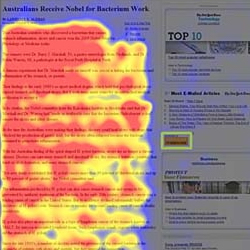
Banner BlindnessIn 1998 researchers Jan Benway and David Lane coined the phrase “banner blindness” for the newly observed phenomenon that web users tended to ignore the colourful, animated banner adverts that had previously been thought to be more likely to be seen.

Over a relatively short period of time, web users had discovered that ad banners tended not to contain information of much value to them – and learned to ignore them and focus their attention on text areas and hyperlinks which were much more likely to contain useful content.

Hence “banner blindness” – web users have essentially trained themselves to ignore banner ads (or perhaps it could be argued that a proliferation of useless banner ads have done the training).

And the same thing happens, albeit more slowly, in the arena of real world sales.

When I first started selling consulting it was fairly easy to arrange meetings with executives. The prospect of a meeting with consultants who might bring interesting and useful ideas to their business was intriguing and unusual enough in its own right to secure a meeting.

Of course, over time, executives' time got tighter, and they discovered that not all consultants brought useful and interesting ideas.

Many claimed to be trying to understand the executive's challenges and needs – but just turned up and tried to shill their products instead. So soon, executives got their gatekeepers to turn down the meeting requests.

Next, we found that by quoting the types of improvement or savings we could make for their business, executives would be more willing to see us. Until, of course, they discovered that almost anyone could call and claim to be able to make 17% cost savings, 26% revenue increases or a 34.875% ROI – without any real knowledge or capability to do so other than in the simplest of situations.

So again, executives got their gatekeepers to turn down the meeting requests.

Today, the most reliable way of securing a meeting is to offer value in the meeting itself – to go through a relevant pre-developed report, white paper, or case studies for example. It's more difficult to claim to be able to do that if you haven't invested the time and brainpower to develop the necessary material.

Hopefully it will be some time before this approach and its value gets diluted (by outsourcing the development of low-quality reports to interns for example).

But the message is clear. In marketing you need to be continually upgrading your approaches – adding more and more value to your client interactions – from initial meetings right up to and after the sale.

If you don't, real world banner blindness will ensure you won't even be noticed.

Onward!

Ian

Featured

Strategy

Selling Without Slides

Posted on May 11th, 2008.

It's a scenario played out in millions of sales meetings every year.

The eager consultant (or lawyer, accountant or salesperson) has finally managed to get a meeting with one of his A list target customers. The customer meets him at reception, takes him to a meeting room and opens with “tell me a little about your company”.

“I'm glad you asked” says our hero as he brings out his pack of slides (or perhaps a glossy brochure, or even worse, his computer) and proceeds to give a thoroughly professional presentation – which unfortunately, does nothing to further the client relationship.

After a brief discussion afterwards the client offers to “call you when we need something in your area”, and the two never speak again.

Of course, it's hardly news that initial meetings with clients need to be about establishing relationships and trying to identify the client's critical needs. The problem is that far too many of us rely on the use of slides or a pre-prepared presentation as a crutch – without realising that the presence of the visual aid can often be a barrier to establishing the relationship we're looking for.

The first problem is that the potential client is no longer having a face-to-face dialogue with you – they're looking at your slides or brochure – or worse still, they're looking at a screen and you're not even physically close to them.

Secondly, if you present material, the meeting changes from dialogue to presentation. From a peer-level discussion to a “master-servant”, “I'm trying to impress you” dynamic.

Finally, the most likely outcome of a presentation is that they begin to ask questions about the presentation. That's what happens when we listen to presentations – they trigger questions and we ask them.

But, of course, at this point it's really you who needs to be questioning them. Trying to find out what they're looking for, what their challenges and problems are.

A far more effective approach is to be able to briefly describe your company in a few sentences, then turn to asking the client about their company, their challenges and what they are hoping to achieve. You can establish your and your company's credibility far more with intelligent questioning and a few “that's interesting, we worked with a client who had what looked like a similar issue recently, they…” follow-ups.

If you need to illustrate points, try a “pencil selling” approach. Have a few blank sheets of paper situated between you and the client and sketch out what you want to show them. It's far more effective and demonstrates your knowledge of the subject rather than just your ability to show slides which could have been prepared by someone else.

Better yet, you can hand the pencil to the client and get them to share in the process – adding in their thoughts and taking co-ownership of the solution or plan you are creating together.

And without the distraction of slides, brochures, or even worse, a computer to look at; you can begin to establish real human to human rapport. This may be the most crucial aspect of all as a potential client is highly unlikely to begin to open up and tell you about any significant problems they have until you establish a base level of trust and credibility with them. And that's so hard to do when you are presenting preprepared material.

So why do we rely on slides and brochures so much?

Very often it's because we have neither the confidence, nor have we done the homework needed to allow us to work without our visual aids. We can't remember all the key points we want to get across, the major benefits to the customer, and our great testimonials. We put all our preparation time into creating the presentation – rather than in thinking about how we should present it.

Ironically, we need to know our presentation and our slides absolutely off-pat – so that we can then do without them and begin to build a real dialogue with our potential client and stand a much better chance of turning that potential client into a real client.

Onward!

Ian

Featured

Mindset

The Joy of Text (or “Is it just me who hates webinars and video”)

Posted on April 22nd, 2008.

Text MessageUpdate: OK. I was wrong.

I've tested video, podcasts, webinars. Here's what happens:

Firstly, you do lose some people. Some people just won't watch videos or tune in to webinars.

Secondly, text really is better for communicating most things.

But – here's the rub – videos and webinars have more impact. You might get less people but you build a better relationship with them, faster.

So I'm using video and webinars a lot more. I'm still doing plenty of text blog posts so that everyone gets something. But video and webinars have the biggest impact.

Here's the original post…

I like to think I keep up with the times. I'm PDAd-up, work a lot via mobile broadband, and of course, run a blog.

But one thing I just can't get the hang of is the increasing use of multimedia resources on business websites.

For me, text works brilliantly. I can quickly scan it to see if I'm interested (and ignore it if not). I can jump ahead to relevant pieces and backtrack to things I want to review – all incredibly easily. I can read at my own pace – taking more time over difficult concepts and speeding up through things I already know. Of all the valuable business resources I have found on the web, almost all of them have been text (with maybe some pictures thrown in).

But nowadays there seems to be an increasing trend to put business resources into video format or run live webinars. And it just doesn't work for me.

Of course, video is great for some things. Instructional material for manual processes can be much better done in video for example. But concepts and ideas?

I almost never join webinars. The thought of sitting in for half an hour or even an hour of my life not knowing whether what's coming is going to be of value fills me with dread. I can't scan ahead, I'm restricted to listening at the pace the presenter is speaking – I can't get him to speed up or slow down to the pace I'd like to be at. I can't backtrack to key points (even on a recording I have to guess where the key points may be timewise).

And it just takes longer. I can read at roughly 3-5 times the speed someone can talk at. So in reality I'll be multi-tasking during a webinar and probably miss the key points anyway. Honestly, who in the real world with a real job really has the time to listen in to webinars and watch videos?

Sure, webinars give a chance for interaction and asking questions – but this can easily be done by requesting questions before writing an article – and that gives more time for deeper thought about the answers than answering on the spot in a webinar.

Video resources are little better. For the explanation of concepts and ideas a talking head (which is most often what it is) is rarely a good substitute for a written article.

So why the move towards the use of video/webinars? Well in my view there are two reasons.

Firstly, people think it's trendy and they're moving with the times and so providing a better service. I wonder if they would think the same if they actually asked their readership whether they preferred webinars/videos to text.

But in reality, I think it's mainly because it's easier to organise and do one than it is to really sit down, organise your thoughts and write in a clear, lucid manner. Of course, you should do this before a webinar or a video too, but frankly it doesn't seem to happen often, What we usually get is a stream of consciousness rather than a well thought out, structured presentation.

So please, to anyone thinking of doing a video or setting up a webinar to cover a business oriented topic – think about whether you could just write about it instead. I'm sure that for most of your potential “customers” it would be far easier and more effective to receive your content in good old text.

Featured

Strategy

Back to Basics: The Vital Importance of Sales Activity Targets

Posted on April 15th, 2008.

Activity TargetsEveryone recognises the importance of having a clear vision for their business, and of setting specific, measurable objectives. And almost all businesses have clear sales targets for the year – and usually quarterly and monthly targets too.

But what I see much less often are clear Sales Activity targets. Targets for what you are actually going to do not what you hope to achieve.

Managing only using sales targets is, of course, like driving using the rear-view mirror. You get an accurate picture of where you've been – but not of where you are going.

In many industries, the typical sales cycle lasts months – and so your actual sales figures show how well you did months ago – not now. Maintaining an accurate Sales Pipeline gives you much better visibility of how you will be doing in the upcoming months – but again, it's focus is on measuring effect (the probable sales) – not cause (the activities that lead to the sales).

In order to effectively run your business you need to set clear targets for what sales activities you will be performing in the upcoming period – and measuring and managing to achieve those targets. If your business is driven by referrals then you must make sure you and your team are actively carrying out the activities necessary to get referrals.

If you're in start-up mode and you're cold-calling, you must ensure that you are doing enough calls, to the right people, in the right way to achieve your targets.

Why do you need to set these targets? Won't people (including yourself) just “do their job” to hit the overall sales target?

Well, yes and no.

Unfortunately, many critical sales activities are difficult or even painful to do. Very few people like to cold call. And even with referrals, asking a client for a referral can be embarrassing for some people. Firing everyone (perhaps including yourself) and hiring people who find these tasks easy is an option – but not a viable one for most businesses.

Instead, having in place a targeting and measurement system which gives people a visible reminder of what they should be doing is the answer.

Sometimes that yearly or even monthly sales target can just be too far away and too theoretical to drive action. You walk into the office in the morning, and you have emails to answer, some customer service queries to deal with, and perhaps the need to talk to the guys on the production line. All of those can seem much more interesting and preferable to getting on the phone to some potential customers, trying to get some meetings, and facing the potential of rejection.

Even contacting existing customer for referrals can seem daunting in comparison. The end of the month seems a long way away, and sales seem to be doing OK – so you take the easy option and deal with the emails and chat to the production guys about the new product coming on stream next year.

But it's a different story if you've worked out that to hit your sales targets you need to be having at least 3 new customer meetings a week – and to get those you need to be making 5 calls per day. And if you don't do that, sales in 3 months time will crash. W

ith those cold, hard figures staring you in the face (preferably literally – stuck on to your wall or PC) it's a lot easier to motivate yourself to make those calls.

Of course, these targets need to be based on facts. You need to break down your sales targets to how much you realistically expect to achieve for your major sales channels (e.g. cold calls, referrals, networking, inbound from website etc.).

The mix will be different for every business – and change over time as your business grows. For many businesses, customer referrals are the best source of new customers – but for a brand new business with no history and no existing customer you will have to supplement this with other channels initially.

Each channel will then have a different sales pattern or sequence of events that lead up to a sale. For cold calling it may be an initial call to a lead to set a meeting, followed by a face-to-face meeting, then a proposal, then a sale.

Historical data will allow you to see your average sales size for each channel, and your success rates at each of the sales stages and so allow you to figure out how many sales you need to hit your target, how many proposals you need to get the right number of sales, how many meetings you need to have, and how many calls you need to make to get those meetings, etc. The same applies to your other main channels.

Now these calculations will be far from perfect and actual results may vary significantly. But they do allow you to set ball-park targets for your key sales activities – and to break those down into weekly or daily targets to provide a highly visible marker of progress.

They also need to be combined with quality criteria and/or targets which ensure that you're not just playing a numbers game, but instead are carrying out your activities properly. For example, asking a client for a referral doesn't count unless you've briefed them in advance, told them exactly what and who you're looking for, and earned the trust in advance to make sure you get a high quality referral. Making a cold call doesn't count unless it's to a qualified target that you've researched beforehand, etc.

Once you have established those quality criteria, and set yourself activity targets based on what will really drive your business forward; you can then us your activity targets as a daily and weekly “conscience” to make sure you are focusing your efforts in the right areas.

The importance of these targets can't be overestimated. Put simply, if you are not hitting your activity targets day by day and week by week – then you are relying on luck to hit your sales targets.

Onward!

Ian

Featured

Selling

You Are What You Sell

Posted on April 1st, 2008.

You Are What You SellSelling professional services has always been difficult.

The intangible nature of services means that potential clients cannot “touch and feel” or test the product before buying – so all the great benefits of the service can often be viewed as simply salesperson's claims rather than hard facts. Worse still: even if your services are unique, highly differentiated and of much higher quality than your competitors – what's to stop them claiming the same thing?

Traditionally, service companies have relied on testimonials, trials and guarantees to try to give customers something more tangible to judge their products by.

But very, very often customers use another key indicator – one that is often overlooked by the service provider.

They judge the service by the person selling it.

They don't just judge the salesperson as a human being or as a seller. They judge the salesperson as the living embodiment of the product.

If you're selling accountancy, legal, consulting or similar services then you're selling the “features and benefits” of the people who will be delivering the service. Maybe you're positioning your firm as leading edge or experts in their field – or highlighting your industry knowledge. Perhaps you stress your responsiveness and ability to partner with your clients. Or perhaps it's your efficiency. In every case, the qualities you stress will be qualities you claim your team will be able to deliver when hired.

How will your potential client judge whether your team really does have these qualities?

Well, if you're smart you'll make sure he is exposed to your delivery team during the selling process so he can see that they have the required skills and qualities.

But the person he will be exposed to most (and sometimes the only person he will be exposed to) will be the salesperson. Will he suspend his judgement, thinking “well, the salesperson won't be involved in delivering the work, so he can act differently to the rest of the team, he doesn't have to have the qualities I'm looking for”?

Of course not.

If your service promise is reliability and the salesperson turns up late to a meeting then the potential client won't believe your reliability claim.

If your service promise is expertise and leading edge thinking but your salesperson is a generalist without in-depth knowledge then he won't believe your expertise claim.

If your service promise is partnering, team-working and responsiveness and your salesperson is an irascible loner then he won't believe your partnering claim.

It's not fair – but it's human nature.

But how many professional service firms actively ensure that their salespeople reflect the values and the qualities that they position their delivery teams as having? And how many train and brief their salespeople so they are clear that this is what's expected of them. In reality – not many. Most focus only on their “pure” sales capabilities and are often very surprised when the salesperson with the best skills fails to deliver the goods.

And do you reflect the qualities of the services you're selling?

If not, you need to be. You are what you sell.

Featured

Strategy

Medium is Beautiful

Posted on March 25th, 2008.

Who are your best customers? It's a question I often ask my clients. And the answers I most often get are either “the big ones” or “the small ones”.

In fact, because I have a ton of experience in selling to large companies, I'm often asked for my advice on how to “land a whale” or to break-in to big companies.

But in my experience, the best, most profitable customers for most businesses are the medium-sized ones. It's certainly the case for me. And when it comes to prioritising business development – that's where I put my energy.

I love small customers and working with SMEs. They have a flexibility and a freedom that makes a real refreshing change from working with big corporates. The trouble is that the revenues from these businesses often don't justify the fixed “overhead” costs of doing business with them. In the work I do, I invest a lot of time really getting to understand my client's businesses, diagnosing what we will need to do to grow their sales, and understanding the best way of implementing my recommendations so that they will really stick.

That up-front investment is pretty much the same for small or large businesses – but with small businesses the revenues I may get from that investment are usually lower. And because my fees are pretty much at the top-end of the market, smaller businesses often struggle to afford me. So sadly, I have to restrict my work with small businesses to a few a year, where I am really going to learn something and grow myself as a result.

Conversely, although the profits I might earn from large companies are theoretically much higher, I find this to rarely be the case.

Nowadays, large companies have “professionalised” their purchasing processes – and in my experience this often means that they have bureaucratised them. The selection processes for suppliers are long, complex and costly – effectively ruling out many smaller businesses and handing a huge advantage to bigger suppliers more used to dealing with these processes and having pre-prepared stock answers to the typical questions asked.

In an effort to have a “fair” process, suppliers are prohibited from speaking to potential business customers during the selection process and are funnelled through the procurement professionals. This hands a huge advantage to incumbent suppliers who know the company well and know how to frame their solutions and responses to resonate with the company's needs and culture. For new suppliers, cut off from rich interactions with the people who are really going to be impacted by or using their products, they have to rely solely on what has been written in black and white on the request for proposal.

As anyone who has been involved in sales knows, it's frequently the case that the true customer requirements only really emerge from in-depth interactions with expert sellers. So by cutting off those interactions, the process effectively becomes a guessing game where the winner is the supplier that is able to most accurately second guess what the customer is really looking for, rather than the one who is best able to deliver it for them.

And of course, the procurement departments in large companies are frequently charged with ensuring “value for money” by squeezing out every last drop of discounts from their suppliers. It's only the very best procurement professionals who are able to get more value by working with the supplier to ensure greater benefits. The majority simply work at reducing the supplier's price.

Now this is not meant as a tirade against large companies and their procurement practices. There are very good reasons for them having adopted those methods. But what it does mean is that for most suppliers, large companies are usually not their best customers.

In my experience, both personally and for my clients; medium-sized companies are frequently the best customers.

They are large enough to place decent sized orders or engage service providers for large projects. They are still small and flexible enough that the seller can engage with the key decision-makers to properly shape up a solution and demonstrate their capabilities rather than working through intermediaries.

And medium-sized companies often have an ambition level that outstrips the large companies. They're not focused on protecting what they've got – they're focused on growth and are willing to take on new ideas to do so. As an additional bonus for service providers, medium-sized companies rarely have their own internal organisations which duplicate what external providers do – so they are more willing to take on outside help.

Of course, this picture is not universally true. Some small companies buy big from certain suppliers. Some large companies are nimble and focused on value rather than just cost. And some medium-sized companies suffer the worst of both worlds.

But more often than not, when you do the analysis and work out the profitability of each of your customers – taking into account all the costs of doing business with them – medium sized businesses come out on top.

The implication? Don't be afraid to focus your prospecting and business development activities on medium-sized companies rather than chasing the big company “whales”.

Onward!

Ian