Ian Brodie

Ian Brodie


Navigation
Searchtime
Featured

More Clients TV

The Uncomfortable Truth About Lead Generation

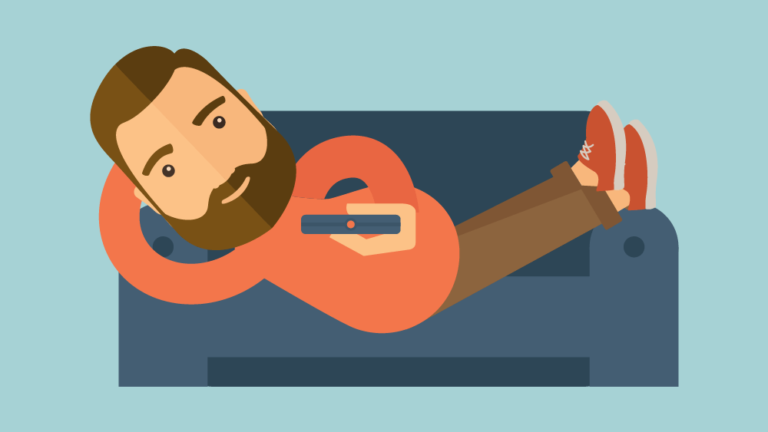
Posted on November 14th, 2018. Lazy Man

Most of us get Lead Generation completely backwards.

We're a bit like the guy who wants to get a date and obsesses about whether he should be going out to clubs, using a dating app or asking friends for introductions – and completely forgets to smarten himself up a bit and try to look his best some people will actually want to have a date with him.

In this video I explain the big mistake most businesses make with lead generation and the simple step you can take to turn that round and get people wanting to meet with you.

Click here to watch the video »

Featured

More Clients Memorandum

It’s almost never either/or

Posted on November 11th, 2018.

Sadly, it seems we live in a world where the Dunning-Kruger effect is writ large.

Those with the least experience and knowledge, but who are supremely confident in their prognoses get all the airtime.

Those who think a bit deeper and see the shades of grey get pushed to the sidelines.

The good news is that you and I don't have to play by the same rules as the masses. We can play smart.

When it comes to marketing, if someone tells you with absolute certainty that their approach is the absolute best in all situations, run a mile.

(Especially if it's an amazing new online course or tool that just so happens to be on launch right now at a never to be repeated price).

You almost always find that a mix of approaches works best, not just one.

Research by Analytic Partners in 2016 showed that if you run a marketing campaign on two platforms instead of one (with a platform being something like TV, radio, paid search or online video) then the ROI of your campaign goes up by 19%. Add another platform and it goes up by another 4% etc.

And this is without increasing your budget. You just allocated it to 2 or 3 or 4 or 5 platforms instead of one.

Now us smaller businesses don't have the time or budget to master 5 marketing platforms of course. But the point is clear. There's no “one best” anything. Lots of different marketing tactics work and they often work synergistically.

You often see this in the eternal battle between online and offline marketing. 

And, of course, the defenders of traditional marketing and the new online pretenders both miss the point. 

They work best together.

Not one or the other.

There's nothing better than face to face approaches to build relationships fast. Especially for high-value clients.

But there's nothing better than online marketing to build a big pipeline of potential clients to nurture “on autopilot” until they're ready to engage personally.

Always try to have a mix of both types of marketing in your business.

Featured

More Clients Memorandum

Be more creative by being less creative

Posted on November 11th, 2018.

My first ever job, back in the 80s, was in IT. Designing and programming self-maintenance systems for big computers.

Ironic given that now I can barely work my phone :)

But back then, I and everyone I worked with prided ourselves in how creative and innovative we were.

So when our firm introduced a new quality management philosophy full of processes and checklists and reusable code, we rebelled.

Big time.

We hated it. All these processes and standard ways of doing things would stifle our creativity. The very thing that made us special.

When, eventually, we were forced to use them, something very different happened.

Instead of spending our creativity reinventing the wheel on a task that had been done a hundred times before, forcing us to follow standard procedures freed up our creativity to focus on the key pieces of work that genuinely needed it.

We ended up being more creative at the things that mattered. By being less creative at the things that didn't.

And just as importantly, it freed up a lot of time to focus on those key creative tasks too.

One thing I've noticed with a lot of the professionals I work with (and with myself too) is we like to do something new every time.

We don't want to send out a standard follow-up message to people we meet at an event, we want to tailor a specific message just for them.

We don't want to use a proposal template. We want to create the perfect one every time.

All sounds great in theory. Unfortunately, we don't have the time or the mental energy to do it properly.

So we end up not following up at all. And we send in a completely unique but not very good proposal because we had to make all the boilerplate and standard stuff from scratch.

Next time you have a little bit of downtime between client work, think about creating some templates and standard processes for key tasks you have to do often. For example:

  • A pre-recorded video that gets sent out to everyone who schedules a call with you to prepare them for the call while further building your credibility
  • A pre-written series of follow-up emails you send in sequence to everyone who signs up for your lead magnet so they get the very best of your ideas without you needing to craft new emails all the time.
  • A “pack” of personal follow-up items – articles or books to post, events to invite to, questions to ask – that can be used again and again with each new potential client you meet.
  • A proposal template with the relevant sections and boilerplate in place so you don’t have to scrabble around when you have a short deadline for submission.
  • Templated email responses for questions you often get asked or frequent requests for information.

Save your brainpower for the stuff that really does need to be creative and different every time.

Featured

Strategy

The Three Networks That Bring You ALL Your Clients

Posted on November 4th, 2018. 3 Networks That Bring You All Your Clients

Exclusive Bonus: The best way to harness your networks to win clients is using Value-Based Marketing. To download your free step-by-step blueprint to implementing Value-Based Marketing and get FREE access to the Fast Start videos that will get you up and running and generating leads and clients fast, click here.

When it comes down to it there are three different types of network that bring you all your clients.

Just three.

The first network is your network of Close Contacts.

These are the people you know well. The ones you could pick up the phone to and pick their brains. People you'd feel happy asking a favour of – and who would feel happy asking a favour of you.

The second network is your network of Casual Contacts.

These are the people you know well enough to drop an email to. Who you probably chat to online if you see them post something. Who you'd be happy to see and chat to at an event. But you wouldn't necessarily arrange to meet up with them on a regular basis.

The third network is your network of Acquaintances or your Audience.

Acquaintances are people you recognise and would smile at at a party. But you don't know them all that well. An audience is even more remote – it's people who know you (for example they listen to your podcast) but you don't know them.

For the vast majority of us, an audience is an entirely new phenomenon. In the past only TV and movie stars had audiences. Or in the business world, the authors of well-known books or those who went out on the speaking trail. Today though we can all build our own audience – whether that's an email list or Youtube followers.

Click here to find out how to make the most of your networks to get clients »

Featured

More Clients Memorandum

I refused to shake hands

Posted on October 28th, 2018.

I refused to shake hands.

We'd just finished a big piece of work with a prestigious client.

It had gone well and the senior client sponsor had come over to say goodbye and thank us for our work.

I'd led the project, but I couldn't bring myself to shake her hand. Instead, I skulked around at the back of the group with my head down and briefly nodded acknowledgement.

It was incredibly childish.

But she'd been a nightmare.

Super smart. Ex McKinsey & Harvard. But a nightmare.

She treated her own team like dirt. Shouted at them and called them idiots. 

Consultants were just hired help who were expected to jump when she wanted, any time of day or night.

And she'd change presentations we prepared, mess them up, then blame us for the changes she'd made.

The project ended fine, of course. You do what you need to do to deliver a great result. But we were all drained at the end.

And on my last day before flying back to the UK I thought “you know what, I just can't shake her hand”.

I think she knew because she didn't push the issue.

When you run your own business or you're part of a smaller firm, one of the huge advantages you have is you don't have to take on clients like this.

In the long run, it's never worth it. Your energy and your sanity are worth much more than the fees.

And if you're doing your marketing right, there'll be another, better, client coming along soon.

Featured

More Clients Memorandum

Have you let this happen to you

Posted on October 21st, 2018.

I've been doing some analysis recently on different types of networks and their value as sources of clients (more on that in an upcoming email).

But one thing I did as part of the process that kind of shocked me was to look back at my own networks. Particularly the close contacts I have in business.

Back when I was primarily doing big consulting projects rather than online training I had half a dozen or so very senior contacts in client organisations who I would say I was close to. People I could pick the phone up to any time and ask a favour of (and they'd do the same to me).

Not surprisingly, they were a really strong source of client work for me over the years. Sometimes directly. Sometimes through referrals.

When I think of them now I realise they've all got one thing in common:

I haven't been in touch with them for years.

I've got lots of excuses. I'm really busy. I don't do big consulting projects any more. Blah blah.

The truth is these were friends at the time and I just let them drop off my radar.

Not only is that bad for business, it's bad friendship.

Easy to fall into of course. Especially if you're a bit introverted like me. But not a good habit.

My goal is to reconnect with these folks – primarily just as a friend. But no doubt it will be good for business too.

Have you let the same thing happen to some of your best contacts? People who could give you or refer you business but you haven't worked with for a while so they're slowly drifting out of your attention.

It's worth taking a good look at some of your best older contacts from a few years ago and doing a sanity check to see if you're unthinkingly letting your relationship with them die.

Now might be a good time to give it a boost.

Featured

More Clients Memorandum

This is easier than you think – and hugely important

Posted on October 14th, 2018.

I mentioned last week that you should be pouring most of your brain power into activities that will have the biggest impact on your business.

And one of the very highest impact activities is to make sure you really understand your ideal clients.

Not surface level. Not “I did a survey a few years ago” level. But the kind of deep understanding that comes from regularly stepping back from the day to day work and asking them about their challenges and goals and longer-term ambitions.

Something it's very easy to forget when you're working with them on an urgent project. And even easier to skip if you've moved on and are now working with different clients.

But those regular check-ins keep you grounded in what really matters. And they build strong relationships too.

So even for those of us who'd prefer to sit down with a good book when we get a few minutes spare, reaching out and setting up a call with a client to chat about bigger issues is going to be a much better use of our time.

And it turns out that talking to clients about stuff they care about is a lot easier than you might think.

Featured

More Clients Memorandum

Where is your brainpower going?

Posted on October 7th, 2018.

I've read a few articles recently about how much of your time you should be spending on various marketing activities.

The problem with those types of articles is that inevitably, you're going to spend most of your time on tactics.

Tactics are what you do day in, day out. If you go to one networking event a week for example then over a year you're inevitably going to spend much more time networking than you spent on your marketing strategy. Even though the marketing strategy is by far the more important of the two activities.

So instead of focusing on the amount of time doing various activities, I've started focusing more on how much of my brain power is going into them.

Even though a networker will spend more time on networking than strategy, they should spend much more of their brain power on strategy.

A rough rule of thumb is that you should be spending about a third of your brain power on understanding your clients and what they want. About a third on strategy (ie deciding how to respond to what clients want: who to target, how to position your offers). And about a third on the tactics.

You'll spend way more time implementing the tactics. But your brainpower needs to focus on building deep understanding of what your potential clients really want, which of them you're going to focus on, what you're going to offer them, and what you're going to emphasise in your marketing.

So many people jump straight to the tactics. But if you get the strategy right the tactics become much more straightforward.

A simple example is Facebook Ads.

They have a ton of targeting options. But if you haven't put deep thought into who you're going to target and what they're focused on then you end up with the same generic targeting that everyone else in your field uses.

Which means you're all bidding for the same interests and your ads all look the same. Up go your ad costs and down go your conversions.

More thought up front lets you target more intelligently and have ads that really resonate. Down go your ad costs and up go your conversions.

Not because you're somehow a Facebook Ads master now. But because you've put your brainpower into strategy.

In fact, if your marketing is becoming a bit of a grind and losing its effectiveness then rather than jump to another tactic it's usually best to go back and examine your strategy. Revisit your understanding of client needs, your targeting and your offer.

It'll have a much bigger impact than just hopping on to a new shiny tactic.

Featured

More Clients Memorandum

Why I write like I write

Posted on September 30th, 2018.

Before you mentally check out thinking “I'm not a writer, this doesn't apply to me” – I'm really talking about creating marketing of any type here.

Could be written content like emails, blog posts or social media posts. But it could be video, audio, anything really.

Anyway, I have a particular “style” of writing emails.

I don't mean a style like a fiction writer would have. Nothing as fancy as that.

But I write emails with a certain frequency and a certain length. They're quite chatty.

And formatted a certain way.

But more importantly, they say something.

My goal in every email is to try to give you a new idea (or at the least, to remind you of an old idea you may have forgotten) that will help move you forward in your business.

It's to build credibility and trust too. So that at some point you might buy one of my products. But I only get to do that if I succeed in giving you something useful to move your business forward.

In my time I've tried lots of different styles of email. I'm sure you've seen them from other people who you've subscribed to too.

Some people email daily. Some do short emails. Others do long ones. Some tell stories. Some are funny. Some talk about themselves and their journey. Some talk about their clients and how well they're doing. Some people rant. Other people try to be nice to everyone.

I chose (actually, it's probably truer to say I evolved) my style of email simply because it was the style I preferred as a consumer.

I like to read emails that give me new ideas and make me think.

So over time, I came to write more and more emails aimed at giving you new ideas and making you think.

All the other stuff about frequency, length, stories or facts. They all became less important than my main goal.

So sometimes I'll do long emails, sometimes short. Sometimes I'll tell a story, often I won't. I'll go through periods of emailing frequently followed by periods of reverting to once a week.

All of those factors can have an impact on how often your emails are opened and read. But none of them are as important as having a clear goal for your emails.

What's your goal?

It's probably different to my goal.

A great start is to think about the emails (or blog posts or videos or whatever format you're thinking about) that you consume and why you value them.

Can you emulate that value in your own content?

You don't have to. But it's a lot easier to do something consistently if you enjoy it yourself and you believe in it.

Featured

More Clients Memorandum

Hey you!

Posted on September 16th, 2018.

90% of marketing – or at least 90% of marketing education – is about grabbing people's attention.

Elevator pitches, Facebook Ads, Linkedin profiles…all the advice is about how to grab the attention of your potential clients.

It's the marketing equivalent of shouting “hey you!” to someone across the street.

But what happens next?

After the person you've shouted at turns their head? After you've got their attention?

That's the important bit.

Although it often doesn't seem like it, getting someone's attention is relatively easy. What's difficult is keeping their attention.

You can't do that just by shouting or making a noise. You have to give something valuable. Something that engages them beyond a knee-jerk response to stimulus.

That's where value-added follow-up is so powerful in marketing.

Whether it's in-person, over the phone, via email marketing or the latest new-fangled messaging tool: follow-up that your potential clients find useful and interesting is the difference between a lifetime client and fleeting attention.

How are you following up? How are you making sure you get more than just that initial spark of attention but instead begin to build a real long-term relationship?

If you don't have a plan in place for how you do it, it's time you did.